The problem
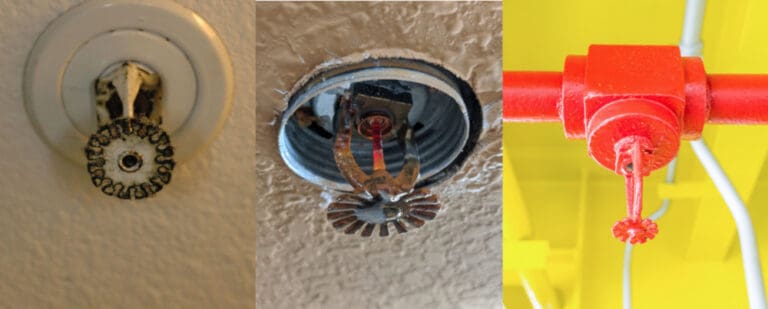
Painted fire sprinklers are more than a cosmetic issue—they can become a costly compliance and safety problem. After renovations or repainting, it’s common to find sprinklers or cover plates with overspray or thick coats of paint covering key parts. The trouble is, paint can interfere with when a sprinkler activates or how it sprays water, and fire protection standards have long taken a hard stance on avoiding it.
If an inspector flags painted sprinklers, replacement is typically required. That usually means draining the system or part of it, meaning associated labor costs, downtime, and headaches for building owners. However, the rules have become more lenient in recent years, leading some people to ask: how much paint is actually too much before a sprinkler must be replaced?
Why this matters
Paint can delay activation by insulating the heat-sensitive element, gum up the deflector or plug to block water distribution, or even seal cover plates in place, preventing concealed sprinklers from operating.
That’s why NFPA 25, the inspection, testing, and maintenance standard for fire sprinkler systems, historically required replacing any sprinkler with any aftermarket paint on it. The 2023 edition of NFPA 25 added some flexibility—but also ambiguity:
5.2.1.1.1 Any sprinkler that shows signs of any of the following shall be replaced:
(6) Paint, other than that applied by the sprinkler manufacturer, detrimental to sprinkler performance
In practice, this means inspectors should assess whether paint affects critical components like the deflector, heat-sensitive element, or plug. However, some AHJs, especially those using older versions of the standard, may still enforce stricter interpretations, requiring replacement if any paint is present.
The fix — and an equipment buyer’s guide
There are two ways to deal with painted sprinklers:
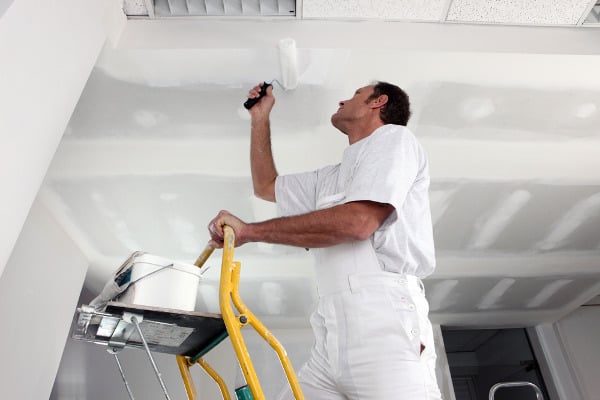
1. Avoid getting paint on sprinklers in the first place! Remove concealed sprinkler cover plates before painting, and make sure painters carefully avoid the sprinkler itself. Protect exposed sprinklers with paint covers or paint caps. Paint covers fit over a variety of sprinklers, whereas paint caps fit in the inner escutcheon rings of specific sprinklers. Shop paint covers and paint caps here.
2. If sprinklers are already painted and the paint is detrimental, replacement is the only option. For sprinklers manufactured after 2000, locate the sprinkler identification number (SIN) on the deflector and replace the old head with a sprinkler that matches the SIN, temperature rating, and finish. Use QRFS QuickFinder or the search bar at the top of QRFS.com to identify your replacement sprinklers fast!
For older sprinklers without a SIN, you’ll need to identify the model and match its performance characteristics. A sprinkler pro or the QRFS customer support team can help!
Product recommendations
FAQs
How do inspectors decide if paint is “detrimental to performance?”
It’s a judgment call. Paint on a sprinkler’s deflector, heat-sensitive element, or plug is likely to be considered detrimental and require replacement. A dot of paint on the frame may not be considered an issue. However, some authorities having jurisdiction (AHJ) may deem any aftermarket paint a problem.
Why can’t you paint concealed sprinkler cover plates?
Painted cover plates can stick to ceilings or walls and fail to drop away during a fire. This prevents concealed sprinklers from deploying, sensing heat, and activating.
Can I scrape or otherwise clean paint off a sprinkler instead of replacing it?
No. Cleaning sprinklers is permitted only to address light to moderate “loading” (dust, etc.), and only if the sprinklers can be cleaned without touching them (e.g., with a vacuum or compressed air). If paint is on a sprinkler and is detrimental to performance, sprinkler replacement is required.
Why does replacing a sprinkler cost so much?
In addition to needing to buy new sprinklers, replacement requires draining the system or a part of the system, which can only be done by qualified fire protection pros. These labor costs can be significant, and the job involves some system downtime.