The problem
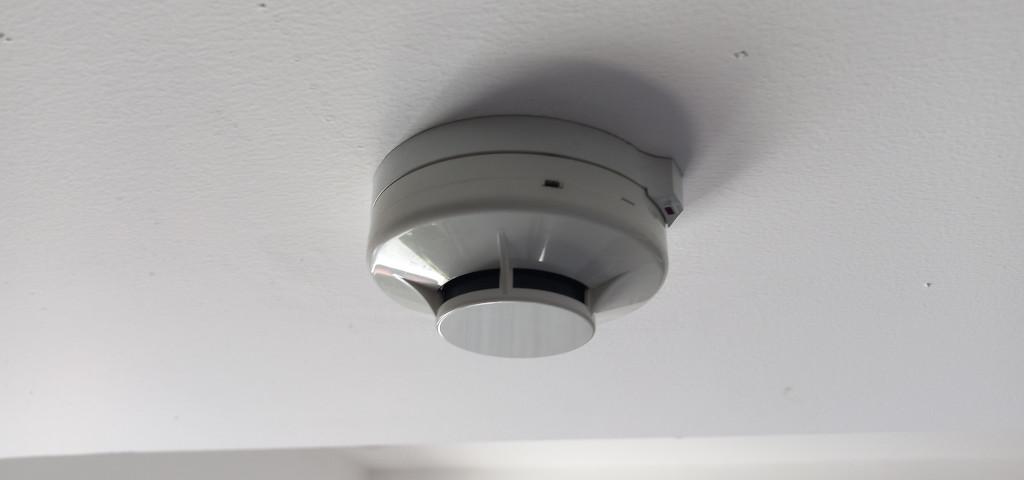
When smoke detectors are mounted on high ceilings—especially when there are a lot of them—testing these devices can become a real headache. System owners are required to perform annual functional tests with aerosol smoke, but ladders aren’t always tall or convenient enough for the job. If you can reach a detector, getting close enough to dispense “smoke in a can” into the sensing chamber can be awkward, inaccurate, and time-consuming.
If you don’t test detectors properly, you risk missing a failing unit—putting people, property, and compliance on the line. And when you’ve got dozens (or hundreds) of detectors to test, the difficulties multiply.
Why this matters
The National Fire Protection Association’s NFPA 72: National Fire Alarm and Signaling Code requires yearly functional tests of smoke detectors—not just a power check.
This document specifies that testers must introduce “smoke or a listed and labeled product acceptable to the manufacturer” into the “sensing chamber” to ensure an “alarm response” (NFPA 72, 2025: Table 14.4.3.2). Smoke detectors have components that can degrade over time, and these functional tests show that they will still perform during a real fire.
If you can’t easily reach the detector, you can’t perform the assessment, or people may be tempted to skip some devices. And that means risking noncompliance, failed inspections, and unknown detector failures.
The fix
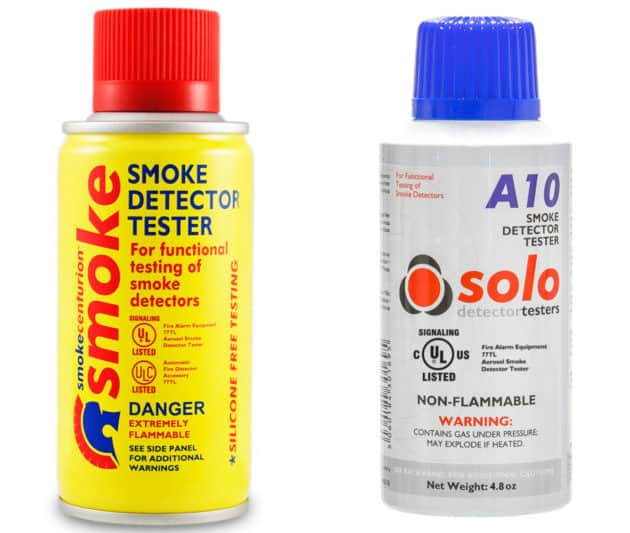
Aerosol smoke (from cans, cartridges, or capsules) is the standard way to perform functional detector tests. But when detectors are out of reach, you need the right accessories to get the smoke exactly where it needs to go.
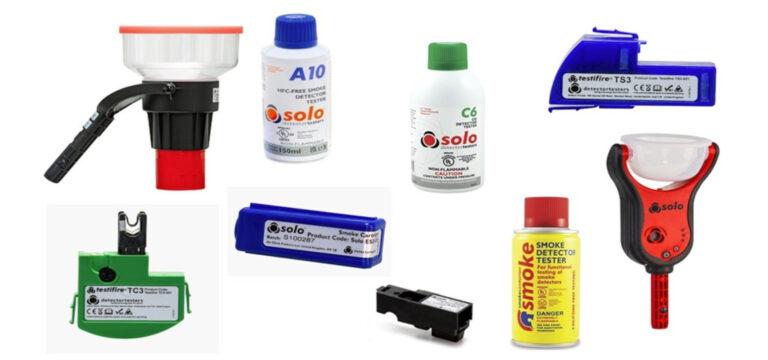
Smoke detector test dispensers—including Solo, Testifire, and Trutest units—fit around a detector and deliver the aerosol directly into its sensing chamber. These units work with detectors up to 4″, 4½”, or 7″ in diameter, depending on the model.
You can pair the dispenser with an attachable access pole to safely reach detectors at additional heights and lengths of 4 ft. to 15 ft. This combination can eliminate ladders (or work with them to test really high detectors), reduce testing time, and ensure the smoke reaches the detector exactly as required.
Buyer’s guide
To choose the right smoke detector testing setup:
- Decide whether you want cans or cartridges, and choose the corresponding smoke dispenser based on its features. A key difference is that heavier aerosol cans have an indefinite shelf life, opened or unopened, while lighter cartridges last about three months after their first use and unopened indefinitely. Determine whether you will test enough detectors to make cartridges an efficient choice.
- Choose one of the access poles, which come in 4 ft., 8 ft., and 15 ft. lengths.
- Consider full testing kits for an all-in-one solution. Each kit has a different mix of components, accessories, and features, including poles, carrying cases, aerosols, and multi-function testers that can also assess heat and CO detectors.
If you have questions or need something you don’t see online, contact QRFS!
Product recommendations
FAQs
Can I use smoke in a can without a dispenser?
Yes, if you can safely reach the detector and apply the smoke accurately. For high ceilings or large facilities, a dispenser and pole make the process faster, safer, and more precise. In contrast to cans, cartridges must always supply a dispenser.
Does smoke in a can work with every smoke detector?
Most standard spot-type smoke detectors can be tested with aerosol smoke, but a few models may have specialized testing requirements. Always confirm what to use in the detector’s manual—manufacturers always specify whether aerosol smoke is acceptable.
How long should I spray smoke during a test?
Apply short bursts until the smoke enters the sensing chamber. Over-spraying can cause residue buildup, so use only the minimum amount needed to trigger an alarm response.
Will aerosol smoke damage my detectors?
No—when used correctly and in accordance with manufacturer guidance. Problems occur only when testers overapply aerosol, resulting in unnecessary residue on or inside the detector.
How do I know if the detector passed the test?
A successful test results in the detector going into alarm after smoke enters the sensing chamber. If the alarm doesn’t activate, repeat the test once. If it still doesn’t respond, the detector may be faulty or require cleaning.