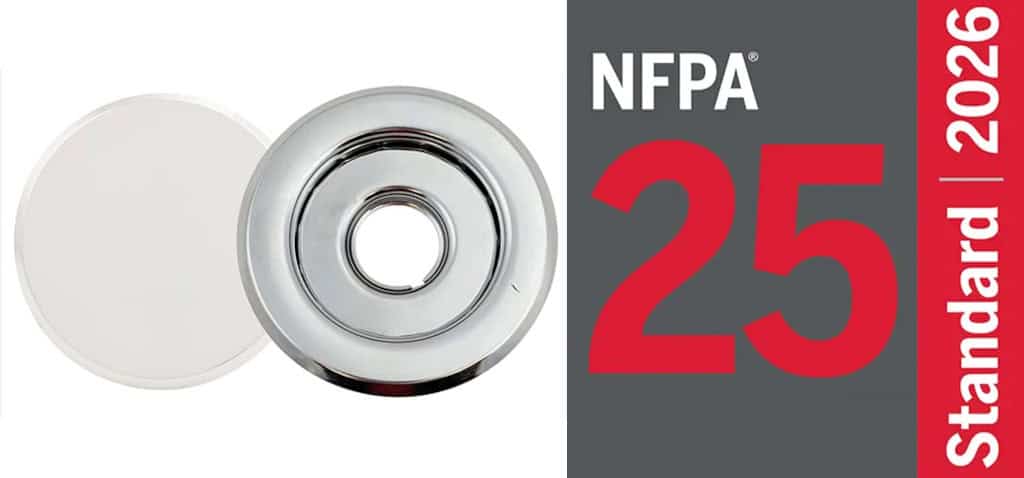
The problem
For years, NFPA rules only specified that you had to replace listed fire sprinkler escutcheons and concealed sprinkler cover plates if they were missing. Not anymore.
Now, under the latest edition of NFPA 25, a missing part isn’t the only trigger. If a cover plate or listed escutcheon is significantly damaged, corroded, painted, loaded with debris, or stuck to the ceiling or wall, it needs to be replaced. Ignore it, and you’re looking at a failed inspection, in addition to possible liability exposure and a sprinkler that may not activate or spray properly in a fire.
Why this matters
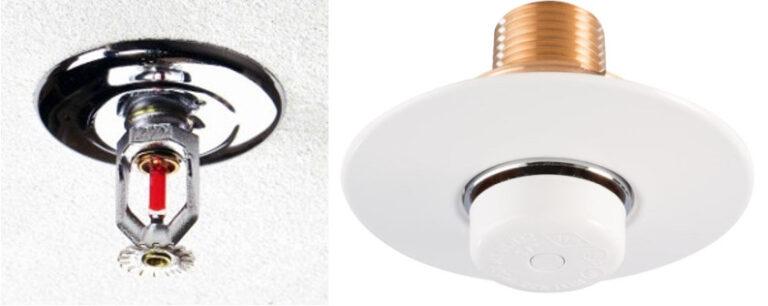
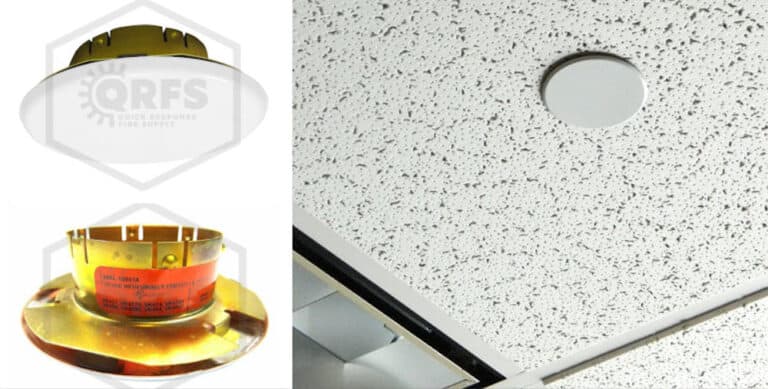
Escutcheons that surround the holes cut to reveal exposed sprinklers and cover plates that hide concealed sprinklers are not just cosmetic add-ons. Listed versions of escutcheons and all concealed covers (all of which are listed) are tested and certified as part of a complete “sprinkler assembly.” If they’re significantly damaged or altered, the sprinkler may activate late, spray off-pattern, or fail entirely.
That’s why the 2026 edition of NFPA 25 added new replacement conditions, which now mirror the rules for fire sprinklers:
5.2.1.1.5 Where escutcheons and coverplates for recessed, flush, and concealed sprinklers are found to be missing or show signs of any of the following deficiencies, they shall be replaced with listed escutcheons or coverplates that are part of the listed sprinkler assembly:
(1) Physical damage
(2) Corrosion detrimental to sprinkler performance
(3) Loading detrimental to sprinkler performance
(4) Paint, other than that applied by the sprinkler manufacturer, detrimental to sprinkler performance
It also adds:
5.2.1.1.5.1 Escutcheons and coverplates for recessed, flush, and concealed sprinklers shall be replaced where found to be adhered or attached to the ceiling or wall.
A painted-over cover plate can stick tight to a surface and fail to fall away during a fire, delaying or preventing sprinkler activation. A bent or corroded escutcheon can shift the sprinkler’s position and potentially block the spray pattern. These issues aren’t just cosmetic—they are code violations and could be life-safety issues, too.
The fix—and a buyer’s guide
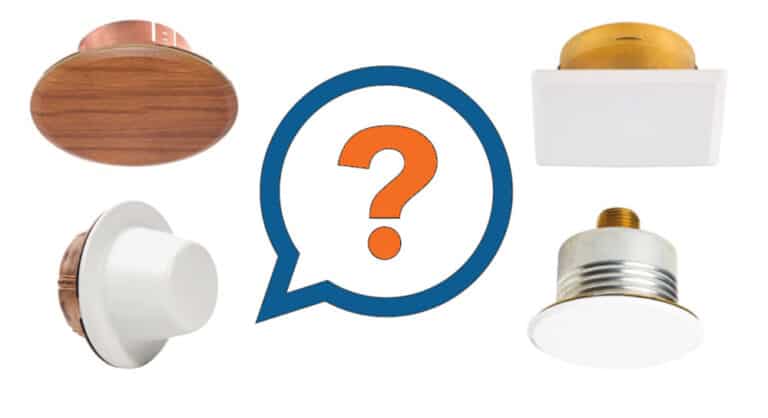
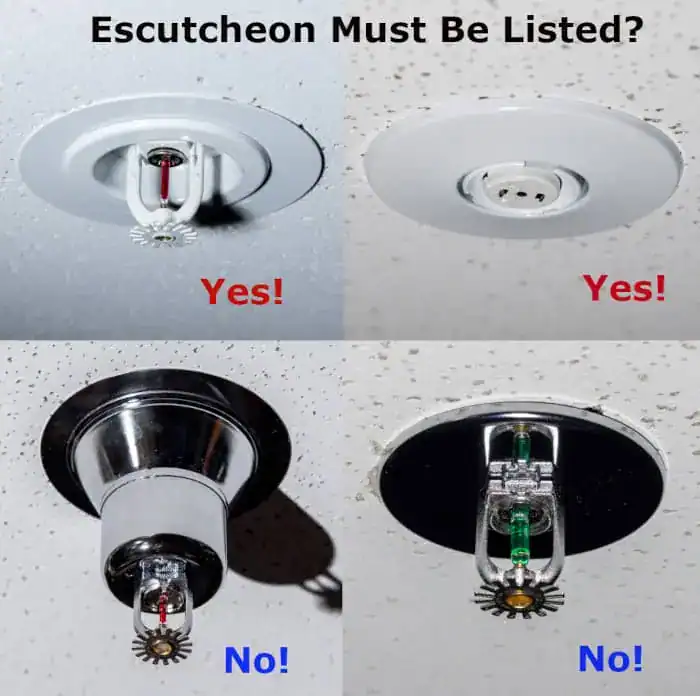
If a listed escutcheon or cover plate has one of the four replacement conditions, first, identify the sprinkler model. Remember, all covers are listed, but only recessed and certain “flush” escutcheons are—read this guide and refer to the graphic below to learn which ones:
Look at the deflector for sprinklers made after 2000 and find the 4- to 7-digit Sprinkler Identification Number (SIN). It will start with a manufacturer’s code:
- R or RA (Reliable)
- TY (Tyco)
- VK (Viking)
- V (Victaulic)
- SS (Senju)
If it’s an older sprinkler with no SIN, research the markings on the frame and deflector to determine the manufacturer and model. If needed, QRFS can help with identifying it.
Next, go to the manufacturer’s data sheet and confirm which escutcheons or cover plates are listed for that specific sprinkler. If you have a SIN, the QRFS QuickFinder or the search bar at the top of this page can help ID these parts fast.
If the sprinkler or its compatible cover/escutcheon is discontinued, you must replace the entire sprinkler assembly with a new listed assembly—a current cover or escutcheon plus the compatible sprinkler—that matches the original sprinkler’s performance characteristics.
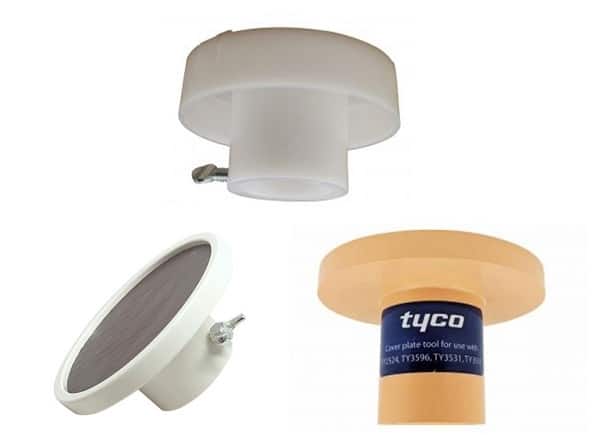
Common covers and escutcheons
FAQs
When do I have to replace a sprinkler escutcheon or cover plate?
You must replace an escutcheon if it is a listed type and any cover plate if it is missing, physically damaged, corroded (detrimental to sprinkler performance), loaded with debris (detrimental to sprinkler performance), painted (other than by the manufacturer; detrimental to sprinkler performance), or stuck to the ceiling or wall, per the 2026 edition of NFPA 25. To learn more about what may be “detrimental to performance,” read what can impair sprinkler heads.
Can I reuse a painted or stuck cover plate?
No. If the cover plate is adhered to the ceiling or wall, it must be replaced. A stuck plate can delay or prevent sprinkler activation because it won’t drop away to expose the concealed sprinkler.
Are escutcheons and cover plates really part of the sprinkler listing?
Yes. All concealed cover plates are considered part of the sprinkler assembly and are tested and certified to function together with that specific sprinkler model. Only listed versions of escutcheons are; specifically, recessed and flush-style types. There is some industry language that creates confusion over which “flush” escutcheons are listed—read this.
What if the original cover plate or escutcheon is discontinued and I can’t buy them?
If you cannot obtain a listed replacement that matches the sprinkler, you must replace the entire sprinkler assembly with a new listed assembly that matches the original sprinkler’s performance characteristics.