


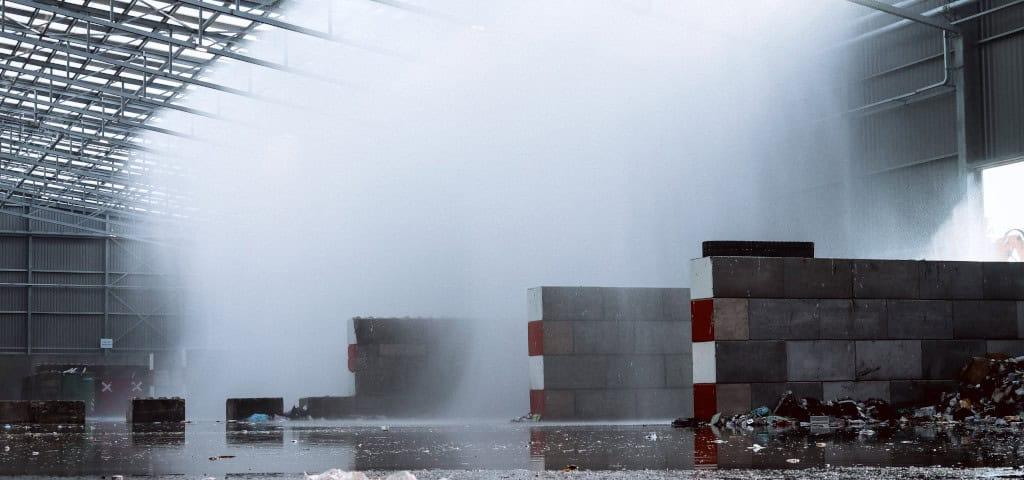
How and why two types of deluge systems deliver a lot of water, fast
In the movies, all fire sprinklers always go off at the same time. It’s dramatic and looks cool, but it’s not how real-world sprinklers usually work. Most fire sprinkler systems use heat-activated sprinkler heads that have a glass bulb filled with a temperature-sensitive liquid or a soldered metal link. Heat from a fire melts the solder on the link or expands the liquid and breaks the bulb, setting off only the sprinklers close enough to sense heat—and only the ones needed to control the fire.
However, as in many things, there is an exception. A typical deluge system works very much like in the movies: water floods through the pipes and shoots out of all the sprinkler heads at once, unleashing a deluge to fight a fire. By spraying water all throughout an area, these systems can protect extremely high-hazard areas where a fire would otherwise rapidly spread out of control.
Deluge systems are both similar to and different from other, ‘traditional’ sprinkler systems. This article explains how, and is your guide to:
- The types of environments that may need deluge systems
- The components of a deluge system and how they work together
- The design principles underlying NFPA 13 sprinkler & NFPA 15 fixed water spray deluge systems
QRFS is your deluge sprinkler partner. Contact us to order open fire sprinklers, or check out our selection of open nozzles for water spray systems.
Some hazardous environments require deluge systems
To determine which fire sprinkler system and its specs are needed for a space, NFPA 13: Standard for the Installation of Sprinkler Systems (currently in the 2025 edition) relies on a core concept called occupancy hazard, which lets designers know how serious the fire hazard is. In most situations and settings, light hazard, ordinary hazard, and extra hazard point designers to the system requirements. If they know the hazard level, they can determine the water density design criteria (more on that in a moment) needed to put enough water on a potential fire. (That said, being a storage occupancy complicates things, which you can read about here.)
However, the most dangerous and difficult environments need special treatment, including an approach that may involve a deluge system. Chapter 27 of NFPA 13 contains a list of different high-challenge environments, some of which might need total water coverage by sprinklers to protect from a blaze. These are typically industrial settings where large quantities of fuel, flammable gases, flammable aerosols, and/or oxygen are used. Some examples (and the NFPA documents that cover these settings) include:
- Flammable propellant charging and pump rooms (NFPA 30B)
- Places where flammable or combustible materials are applied by spray (NFPA 33: 9.5.1.1)
- Solvent extraction (NFPA 36: 4.9.1)
- Mobile acetylene trailer system (NFPA 51: 10.5.8.1.1)
- Some aircraft hangars (NFPA 409: 7.4.1.2)
- Aircraft engine test facilities (NFPA 423: 7.6)
- Hyperbaric facilities (NFPA 99)
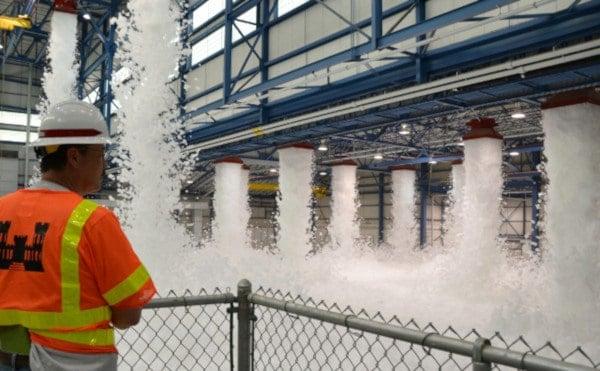
As you can see from the list above, many of these special hazard occupancies are governed by rules in specific NFPA codes or standards, such as NFPA 423: Standard for Construction and Protection of Aircraft Engine Test Facilities. Some of these documents say that certain environments “shall” be protected by a deluge system. Others list deluge systems as one option among several. Still others list a foam/water deluge system as a possibility. It’s up to the engineer of record and different authorities having jurisdiction (AHJs) to evaluate a specific hazard and the relevant codes and standards to determine when a deluge system is needed and how to implement it.
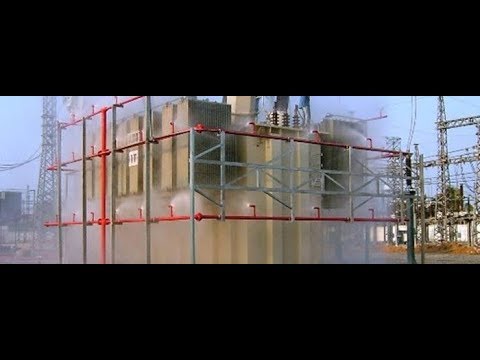
Besides a “classic” NFPA 13 sprinkler system, there is another type of sprinkler system, governed by another standard, that “deluges” water. NFPA 15: Standard for Water Spray Fixed Systems for Fire Protection (2027 edition, currently) may have a vague and complex-sounding name, but the concept is actually quite simple. Instead of providing fire protection coverage over a broad area like an NFPA 13 system, “water spray” or “directional spray” systems apply water directly and aggressively to a specific thing they aim to protect using nozzles (more on those later).
For example, consider a massive, oil-filled transformer. If such a device overheats and catches fire, it could explode. An NFPA 15 system can douse the whole thing with water to prevent that, as shown in this video:
The components of a deluge system
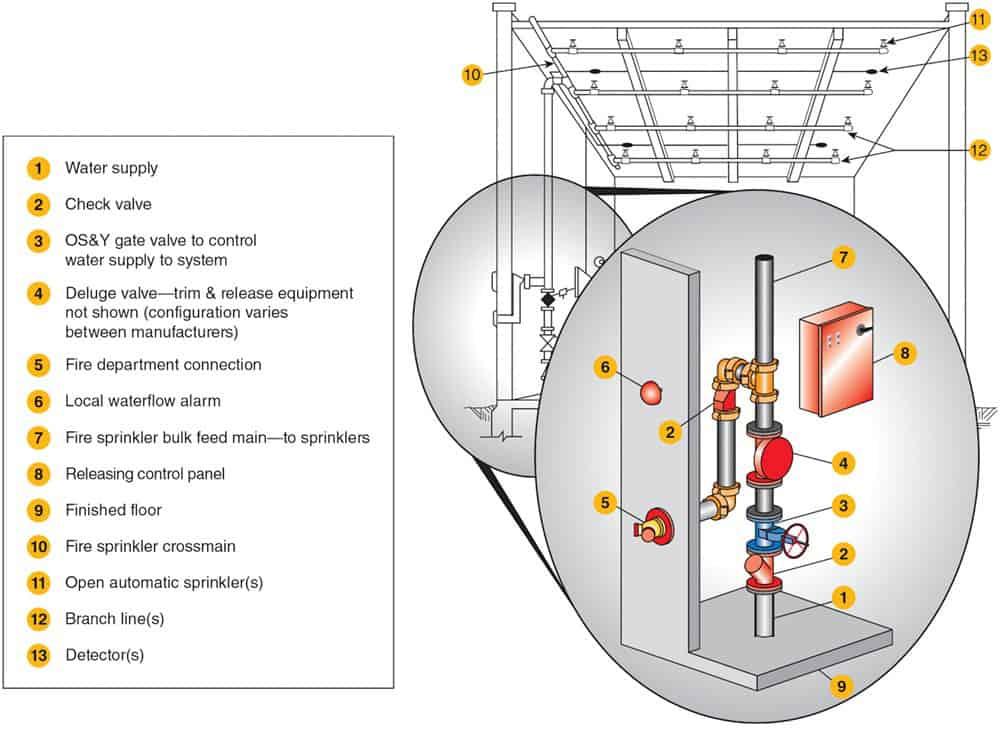
The basic components of a deluge system are:
- The deluge valve
- The actuating devices
- The sprinklers or nozzles
The deluge valve releases water into the system
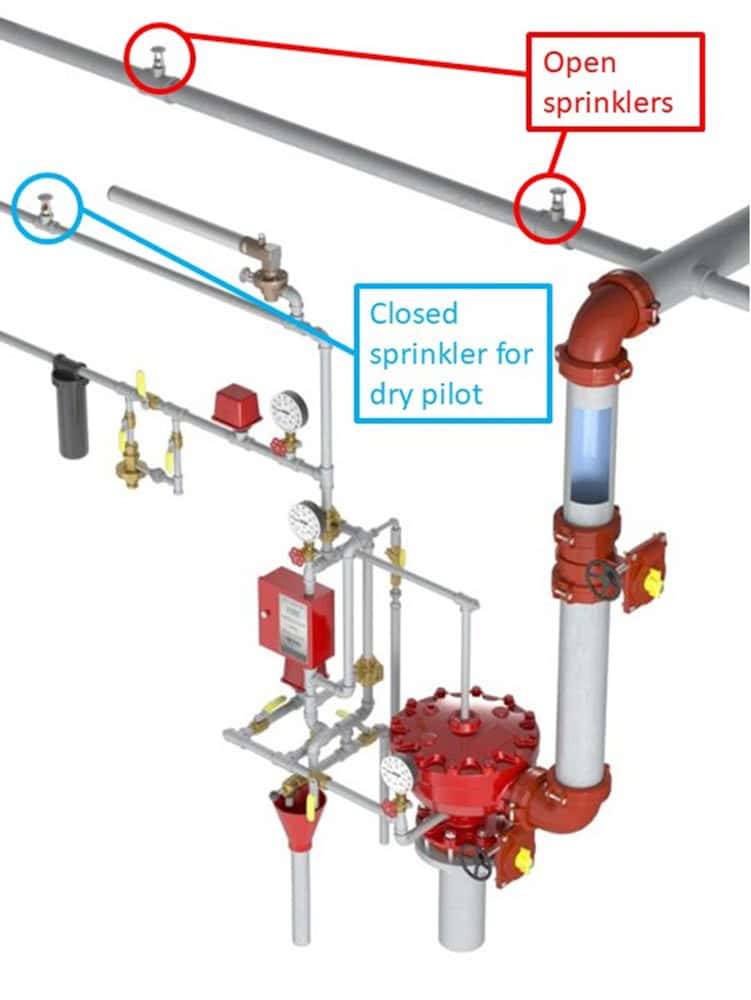
The beating heart of a deluge system is the deluge valve. When it’s shut, the deluge valve holds back water from all the (usually) open sprinkler heads or nozzles in a deluge system. In the event of trouble—determined by a device that sends a signal—the deluge valve opens, letting water flood through the pipes and out the sprinklers or nozzles. There are different ways of actuating, or opening, this valve.
Actuating devices activate the deluge valve
The deluge valve remains closed except in emergencies, and for good reason—that’s a lot of water. But when you need a deluge system to activate, boy oh boy, do you need it. Actuating devices ensure that the deluge valve opens when it must.
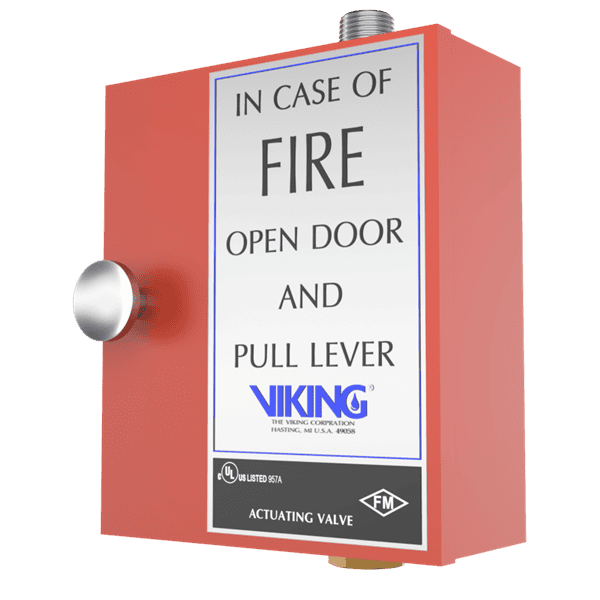
These devices can be electronic sensors, such as smoke or heat detectors. They can also be manual pull stations that send an electrical signal to the valve. Also known as “oh ****” buttons, these are similar to fire alarm pull stations but allow staff to activate a deluge system themselves. Manual pull stations are required, for example, in acetylene cylinder charging plants.
Finally, pilot sprinklers, either pneumatic or hydraulic, can also be used to actuate a deluge valve. Pilot lines with sprinklers (NFPA 13: 3.3.223.4.14) use a pipeline that’s pressurized with water or air; as long as the pressure is maintained, the valve stays closed. When a sprinkler activates because of a fire, the pressure is released, causing the valve to open. This is, in fact, how dry and many preaction systems (the latter at least partially) also work, with the difference that most sprinklers are still open in deluge systems, with the exception of the pilot lines.
Open fire sprinklers and nozzles
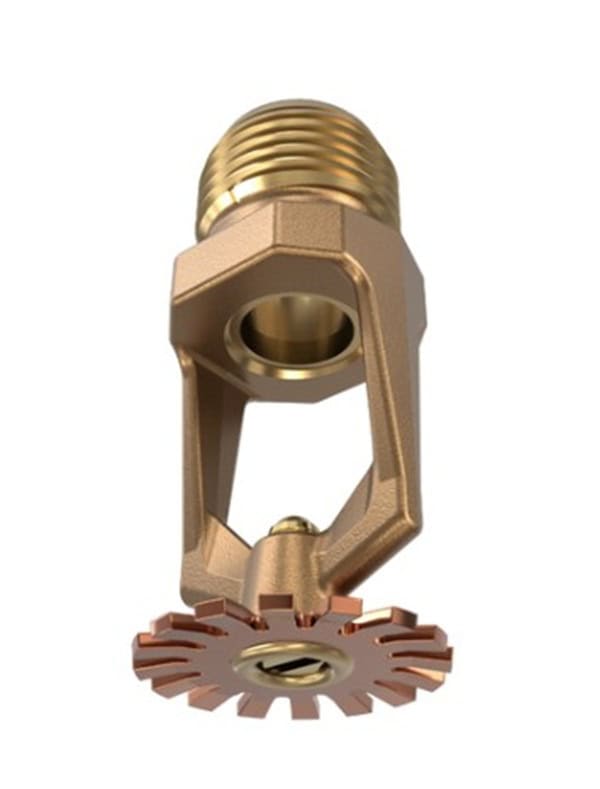
The business end of a deluge system is the open fire sprinkler or nozzle. Open sprinklers, like normal sprinklers, are designed to shape the spray of water to achieve specific fire protection objectives. The key difference is that open sprinklers don’t have heat-sensitive bulbs or fusible metal links that hold the water back until they break due to heat.
Many fire sprinkler models are available as open sprinklers without their usual heat-sensing elements. You could, for example, install a 5.6K VK102 head in a standard office building environment with its glass bulb or in a deluge system protecting a more hazardous space as an open sprinkler.
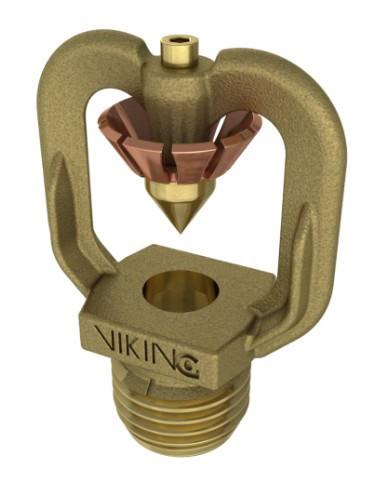
However, deluge systems sometimes also use special hardware. Nozzles are similar to fire sprinklers, but they produce unique water spray patterns, including directional spray at defined angles, to protect specific objects. For example, an array of nozzles may be set up to prevent large oil-filled electrical transformers from overheating and from exploding. Again, such systems are known as fixed water-spray systems, and their requirements are delineated in NFPA 15.
Design concepts for deluge sprinkler systems
Despite being used in serious, high-hazard occupancies, the concepts underlying most deluge systems are substantially the same as for other fire sprinkler systems. NFPA 13’s design requirements are built around the density/area concept, under which sprinklers and pipes are planned to deliver a certain amount of water over a given area. From that target value, designers work backward to the water pressure, pipe size, and other requirements.
Deluge systems are calculated in much the same way, with two exceptions. First, calculations for deluge systems account for the fact that many sprinklers will flow water simultaneously, whereas standard sprinkler systems assume a smaller design area in which only a handful of sprinklers operate. Having all sprinklers flowing typically means the design needs that much more water volume and, correspondingly, more water pressure.
For most NFPA 13 sprinkler systems, determining the required design density is somewhat plug-and-play: just know the occupancy hazard, and a designer can pick the required density from a table. However, NFPA provides corresponding values for NFPA 13 deluge systems piecemeal: a designer must consult multiple documents that frame the issue differently. Here are a couple of examples of the unique design requirements for different settings:
- Acetylene tank charging stations are governed by NFPA 55: Compressed Gases and Cryogenic Fluids Code (with rules formerly in NFPA 51A), which specifies using the same design density that is used for NFPA 13 systems protecting Extra Hazard Group 1 occupancies.
- Aircraft engine test areas are regulated by NFPA 423: Standard for Construction and Protection of Aircraft Engine Test Facilities, which specifies a design density of at least 0.50 gpm/ft2.
Note that NFPA 15 directional spray systems use different design criteria than NFPA 13 systems, including the deluge systems governed by NFPA 13. Look out for an article on NFPA 15 systems later! In the meantime, feel free to check out QRFS’s series of blog entries on the design concepts underlying NFPA 13 fire sprinkler systems:
- How Much Water Pressure is Required for Fire Sprinkler Systems?
- The Elements of Fire Sprinkler System Design
- Fire Sprinkler Hydraulic Calculations: What Happened to Density/Area Curves?
- How to Size a Fire Pump and the Basics of Performance Curves
Deluge sprinkler systems and fixed spray systems have unique objectives
Deluge sprinkler systems fulfill a unique and vital niche in fire protection. In the highest-hazard environments, these systems apply large volumes of water very quickly to prevent disasters. They use unique hardware, including open sprinklers or nozzles and deluge valves, but also rely on principles shared with “standard” fire sprinkler systems. Regardless, there are unique rules for installing and maintaining these specialized systems, along with unique parts.
Building out a deluge system or need replacement components? Contact QRFS to order open versions of fire sprinklers, or check out our online selection of open nozzles for water spray systems.
If you don’t see what you need or have questions, contact our customer service team.
This blog was originally posted at blog.qrfs.com.
