The problem
You’ve got sprinkler gauges in your system, and you know NFPA 25 says they need to be replaced or tested every five years—but five years from when? Manufacture date? Installation date? Many people aren’t sure, and QRFS gets this question a lot. That confusion can lead to missed deadlines, failed inspections, and systems running with inaccurate pressure readings. If your gauges are off, you could fail to spot incorrect pressures and slow system leaks, leading to bigger problems later.
Why this matters
Fire protection systems depend on accurate pressure readings. Gauges take a beating from vibration, pressure spikes, and everyday wear. Over time, they drift—and when they do, small system issues go unnoticed until they become major problems.
This is why NFPA 25 has always mandated replacing or testing gauges every five years, but the 2026 edition finally made when the clock starts clear (some emphasis added):
13.2.4.2* Gauges shall be replaced every 5 years after their date of installation or tested by comparison with a calibrated gauge every 5 years.
No more questioning this timing! A gauge that sits in a box rather than being installed shouldn’t lose accuracy, since it’s not subject to use over the years.
The fix
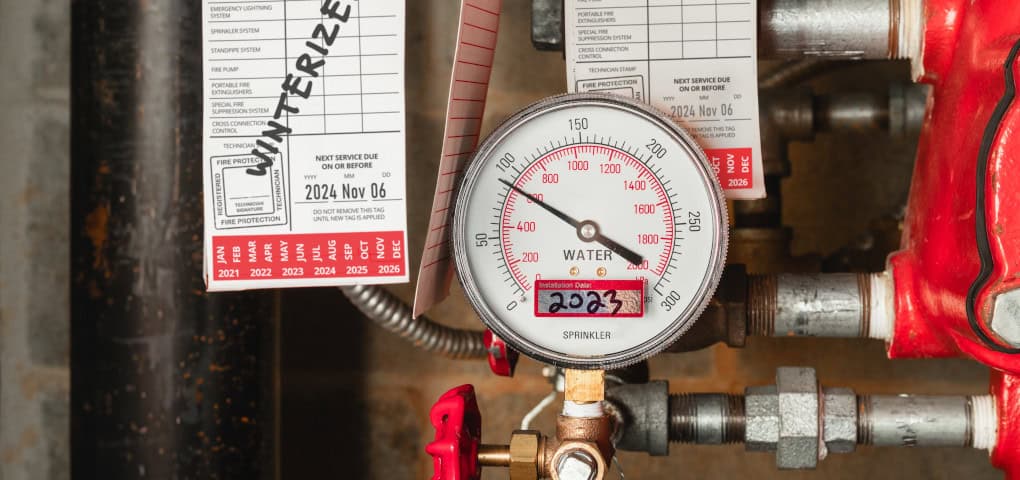
Start tracking installation dates. System pros often do this by writing the date on the face of a gauge with a permanent marker. If you don’t know when a gauge was installed, the components are inexpensive enough that you can just replace them and record the date now.
At the five-year mark, there are two options:
- Test the gauge. A pro reads the system pressure on a calibrated gauge and compares it to the existing gauge to determine whether the reading is within 3%. If a gauge is accurate, it’s good. If not, it needs recalibration (by sending the old gauge off to a qualified calibration provider, such as a lab) or replacement.
- Replace the gauge outright, which is a faster and common approach. As NFPA 25 states, “In many cases, replacement might be more economical than testing.”
Buyer’s guide
At five years after installation, either test or replace your gauges. Most pros and system owners skip testing and go straight to replacement to save time and ensure accuracy. When buying a gauge:
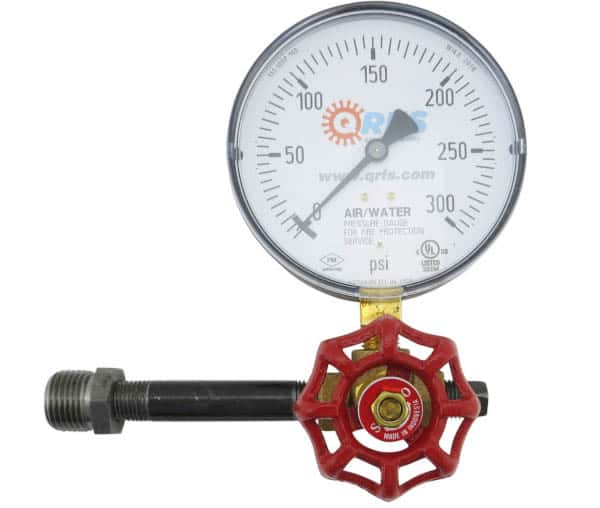
- Select a gauge with a pressure range at least “one and a half times the normal system working pressure at the point where installed” (NFPA 13: 16.13.3). A 0–300 PSI gauge or a little lower works for many fire sprinkler systems.
- Get the right connection size for your system—at least 1/4-inch NPT for NPT systems.
- Choose gauges that meet authority having jurisdiction (AHJ) approval. Unlike many system parts, NFPA standards don’t require gauges to be listed; only approved. But listed (UL Listed and FM Approved) options are widely available and meet these requirements.
Product recommendations
FAQs
Do I count five years from the manufacture date or date of receipt?
No. NFPA 25 clearly states that the five-year interval starts from the installation date. This text used to be found in explanatory material in older versions of NFPA standards, but it’s now explicit in the main section.
Can I test the gauge instead of replacing it?
Yes. A fire protection pro can compare it to a calibrated gauge. If it’s within 3% accuracy, it can remain in service.
What happens if the gauge is inaccurate—what’s the process?
It must be recalibrated by a qualified provider or replaced. This involves sending the gauge off to a qualified calibration provider, such as a lab. This takes time and involves costs, so it’s commonly considered easier and more efficient to just buy new ones.
Do sprinkler gauges need to be UL Listed or FM Approved?
They don’t have to be listed, but they must be approved by the AHJ. UL Listed and FM Approved gauges (both of which are considered “listed” in NFPA terms) meet and actually exceed this requirement.