


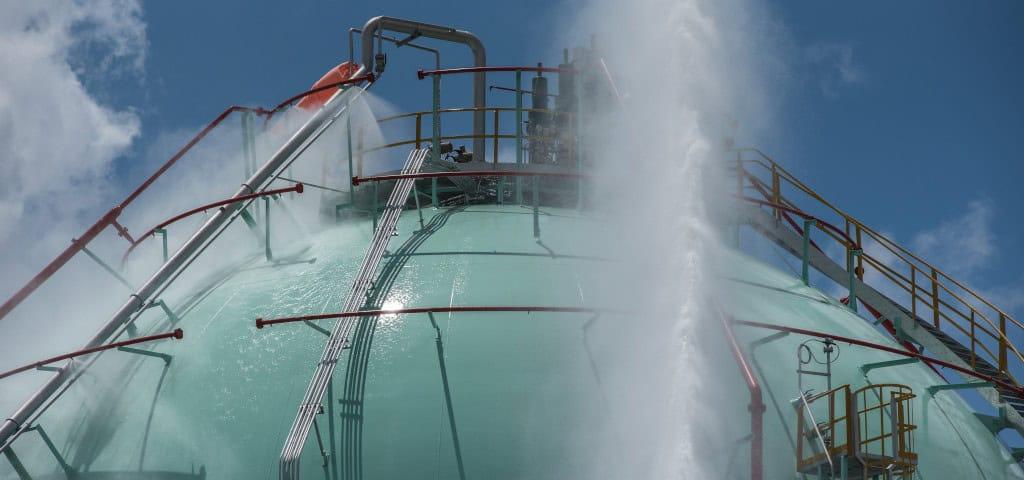
NFPA 15 directional spray systems protect against special hazards
Water spray systems, also called fixed spray systems or directional spray systems, differ significantly from fire sprinkler systems. While both fire protection system types spray water, a fixed spray system uses specialized nozzles to protect specialized and high-hazard environments, typically with deluge functionality rather than automatic heat-sensing sprinkler heads. NFPA 15: Standard for Water Spray Fixed Systems for Fire Protection (2027 edition) is the document governing these systems, while the NFPA 13, NFPA 13R, and NFPA 13D standards cover sprinkler systems.
This article is your primer on NFPA 15 systems. Specifically, we’ll look at:
- What NFPA 15 systems are, and what they do
- NFPA 15 design goals and use cases
- Key hardware and components of NFPA 15 systems
- How these systems are designed
QRFS has the nozzles you need for a water spray fixed system—check out our catalog today! If you need additional hardware that you don’t find on our website, contact us.
What is an NFPA 15 water spray system?
NFPA 15 defines a “water spray system” as follows:
3.3.24 Water Spray System.
An automatic or manually actuated fixed pipe system connected to a water supply and equipped with water spray nozzles designed to provide a specific water discharge and distribution over the protected surfaces or areas.
This is a fairly vague definition compared to many fire protection terms, but we can comprehend its meaning by focusing on two phrases: “specific water discharge and distribution” and “over the protected surfaces or areas.” The essence of a water spray system, and its distinction from an NFPA 13 sprinkler system, is in how it sprays water (“specific water discharge”) and what it sprays water on (“protected surfaces or areas”).
NFPA 13 systems, even more specialized deluge sprinkler systems, discharge water more generally, focusing on blanket coverage of an area in a specific design density. The goal is to deliver water throughout a coverage area, and fire sprinklers are designed for that purpose, with their characteristic (typically umbrella-shaped) spray pattern. Most automatic water-based fire protection systems are NFPA 13 sprinkler systems, and, as AXA XL Risk Consulting explains, deluge NFPA 13 sprinkler systems are particularly useful for protecting crowded, cluttered environments.
However, sometimes, a more targeted application of water or a specific spray pattern is needed. This is what NFPA 15 water spray systems provide by using nozzles instead of sprinklers. Unlike sprinklers, nozzles are more specialized water-spray hardware. They can often spray in any direction—up, down, sideways, or at angles—and the shape of the water jet leaving the nozzle can be customized. This ability to deliver a targeted water spray at any angle or shape to protect equipment, fuel sources, or other objects is what defines an NFPA 15 system.
NFPA 15 design goals and use cases
Directional spray systems serve different purposes than classic NFPA 13 systems. Standard sprinkler systems are typically designed to control or suppress a fire and may possibly extinguish it, but the “why” of an NFPA 15 system can be very different. The standard defines four core design objectives (1.1.2) for water spray systems:
- Extinguishment
- Control of burning
- Exposure protection
- Prevention of fire
Let’s take a closer look at each of these objectives, plus some specific use cases for NFPA 15 systems.
Extinguishment
Extinguishment is as straightforward as it gets. Spray systems designed for extinguishment want to put out the fire, not merely control it. NFPA 15 discusses that there are multiple ways to do this, depending on the physics and chemistry of the blaze. Extinguishment can be achieved by lowering the temperature or depriving the fire of oxygen by smothering it with steam. However, for some liquid-fuel fires, extinguishment can be achieved by diluting or emulsifying the liquid to stop combustion.
Control of burning
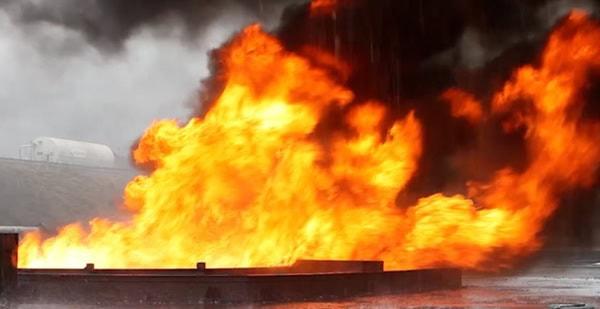
In some fire scenarios, extinguishment by an automatic system is not a realistic goal. Instead, containment and control of the blaze are prioritized. NFPA 15 explains (7.3.1.1) that this containment can allow the flammable material to be consumed, provide time to shut off fuel leaks or spills, and enable firefighters to arrive and extinguish a blaze. Fires that burn on pooling liquid fuels are major candidates for control rather than extinguishment.
Exposure protection
Water spray systems designed for exposure protection don’t directly fight the main fire or its cause. Instead, they mitigate the negative consequences of the fire, preventing further bad things from happening. For example, nozzles may spray water on critical building structures to cool them and prevent damage from high heat. Beyond structural protection, exposure control can involve protecting instruments, compressors, pumps, cables, and vessels from damage. In an industrial environment, failure of equipment like this could cause a cascading disaster.
Prevention of fire
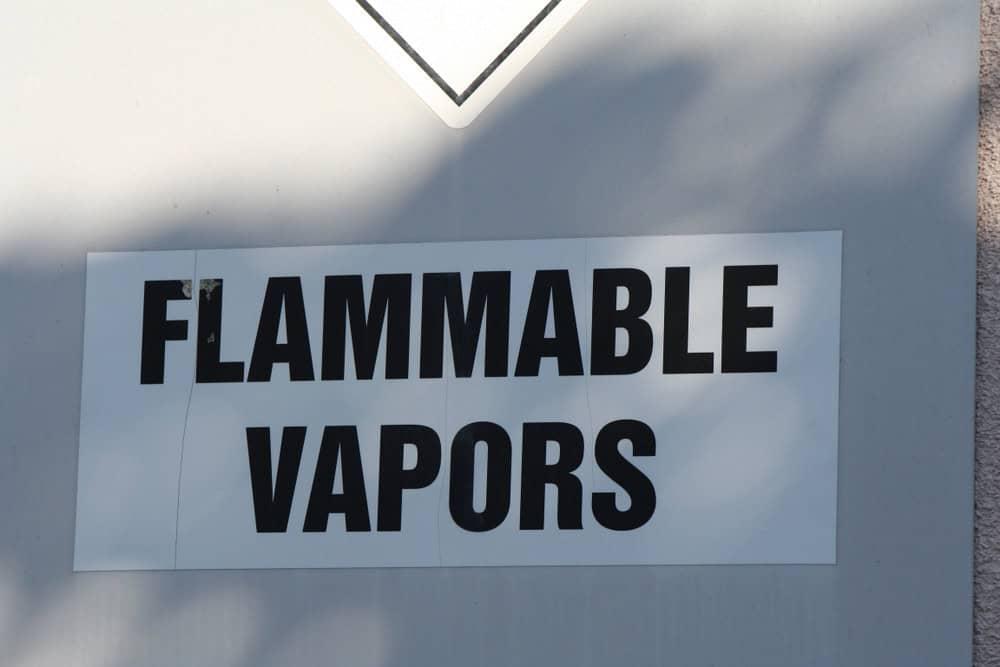
“Prevention of fire” means exactly what it says: keep a fire from starting in the first place. The major use of this principle is during a spill or leak of flammable materials, especially flammable liquids and gases. In the case of flammable vapors that could ignite, this is called “vapor mitigation” (A.7.5). Nozzles are designed to spray water to dissolve, dilute, disperse, or cool a fuel until it is no longer flammable.
To activate the deluge valve on a water spray system intended for fire prevention—thereby flooding the system and spraying water from the nozzles—special detection devices are needed. As we discussed in our recent article on deluge systems, a deluge valve is controlled by one or more actuating devices, and if the goal is to prevent a fire before it starts, smoke and heat detectors won’t work. Per NFPA 15 (7.5.7), gas or vapor detectors can be used to spot a leak or spill and activate water spray before the material ignites.
List of use cases
Water spray systems may be used to protect:
- Electrical transformers (exposure protection, ignition prevention)
- Facilities processing flammable liquids, gases, or vapors
- For spills and leaks (prevention of fire)For fires on pooling liquids (control)
- To prevent failures of pipes, pumps, compressors, etc. (exposure protection)
- Gas storage tanks (extinguishment, exposure protection)
- Cable runs and trays (extinguishment, control, exposure protection)
- Coal conveyors and shoots (extinguishment, control)
- Pulp and paper mills, textile mills (extinguishment, control)
Key hardware and components of NFPA 15 systems
Spray nozzles are the business end of NFPA 15 systems. Some nozzles closely resemble standard fire sprinklers (they have frames and deflectors to shape water spray). However, water spray systems need specific water spray patterns and are directional spray systems. Nozzles provide his specificity and directionality because a myriad of types can be installed at nearly any orientation or angle and offer customizable spray patterns.
Nozzle manufacturers produce a range of nozzles for various applications. There are:
- High- and medium-velocity nozzles
- Mist nozzles
- Window nozzles
- Duct nozzles
- Cooling tower nozzles
- And more!
A key feature of nozzles is that they are often directional, unlike sprinklers, which can be installed only in a single orientation (upright, pendent, sidewall, etc.). Though some nozzles require specific orientations, installers can generally place them at any angle.
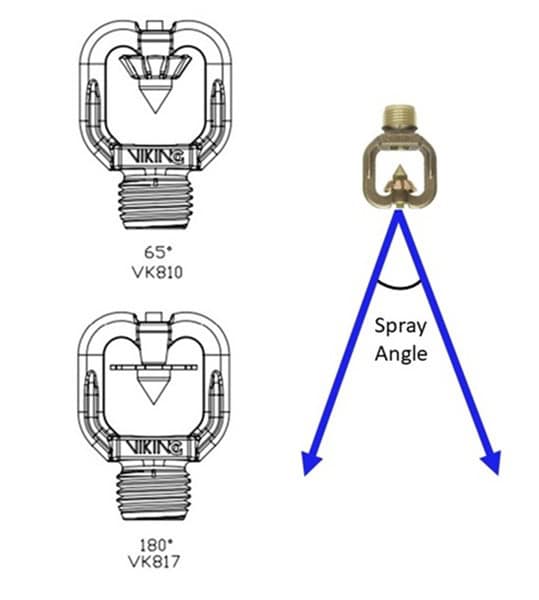
In addition to allowing custom installation angles, many nozzles also offer variable spray angles. The spray angle is the angle made by the water jet as it exits the nozzle; 180° is the broadest water spray, while 65° is a quite narrow, tight spray.
The combination of adjustable spray angle and installation angle means nozzle spray patterns can get quite complicated and have to be calculated for individual circumstances and system designs. The standard coverage areas of NFPA 13 sprinklers don’t apply here!
Deluge valves deliver water to all nozzles at once
The other big feature of nozzles is that almost all of them are open, rather than sprinklers, which automatically activate without separate detection hardware. An automatic fire sprinkler has a heat-sensitive element that breaks at a specific temperature due to nearby heat, allowing water to flow automatically in most system types. Open nozzles (and open sprinklers) don’t have this local mechanism—they will let water flow when the system floods.
Most nozzles are open (A.6.2.1) because almost all NFPA 15 systems are deluge systems that rely on a deluge valve to control water flow. As we wrote in our recent article on deluge sprinkler and spray systems, deluge valves work much like dry and preaction valves, except they are designed to deliver water to all open nozzles or sprinklers simultaneously.
The operation of deluge valves depends on different actuating devices installed throughout a protected area. Actuating devices can be anything designed to detect trouble and send an electrical signal to the valve. Heat detectors, smoke detectors, and flammable gas detectors are examples of electrical sensing devices that can be used for this purpose. Manual pull stations may be used by personnel to activate the system when someone sees trouble.
Pilot lines, which use pneumatic (air) or hydraulic (water) pressure stored in a separate pipeline capped by an automatic nozzle, can also trigger deluge valves. If the pilot nozzle activates due to heat, much like a regular sprinkler, the pressure in the line will be released, triggering the deluge valve to open.
Deluge systems are the norm for NFPA 15, with section 6.2.1.1 of the standard even specifying, “Open water spray nozzles shall be used.” However, the standard also contemplates situations where automatic nozzles might be used (that is, used outside of pilot lines). The use cases are a little vague: “to prevent equipment damage” and where “there are environmental concerns” (A.6.2.1), and these applications are left to the system designer’s discretion. NFPA 15 emphasizes that automatic nozzles should still “provide satisfactory performance with respect to activation time and distribution.” (6.2.1.2)
The system design and layout basics
We’ve published several articles on hydraulic calculations and design approaches for NFPA 13 sprinkler systems, including:
- How Much Water Pressure is Required for Fire Sprinkler Systems?
- The Elements of Fire Sprinkler System Design
- Fire Sprinkler Hydraulic Calculations: What Happened to Density/Area Curves?
These calculations and designs can be complex, but NFPA 13 is still a pretty straightforward document. For most commercial occupancies, it’s possible to use only the information in the standard to lay out sprinklers, size pipe, perform hydraulic calculations, and more. But NFPA 15 is a different beast.
Again, NFPA 15 fixed-spray systems are highly specialized systems for special hazards. So, many standardized design approaches won’t work.
NFPA 15 emphasizes the designer’s expertise in this process. For example, section A.1.1.2 of its Annex says:
The design of specific systems can vary considerably, depending on the nature of the hazard and the basic purposes of protection. Because of these variations and the wide choice in the characteristics of spray nozzles, these systems should be competently designed, installed, and maintained.
Section A.4.3 drives home the value of expertise: “Water spray system installation is a specialized field that is a trade in itself.”
Water spray system designers need deep knowledge of the specific hazards and potential fire situations a system will address. There are numerous questions to answer in the design process, such as:
- Is the fuel a solid, liquid, gas, or vapor?
- What is the autoignition temperature?
- Is the liquid fuel water-soluble?
- Is emulsification a helpful firefighting measure?
- Could water spray cause liquid-fuel fires to spread? (A.4.4.1)
- Is extinguishment possible?
- Or is it more important to control and provide exposure protection?
- Is the hazard so high that ignition prevention is the goal?
- Are windage or thermal updrafts (A.4.1) anticipated?
The list goes on!
That said, designing water spray systems still relies on the familiar water density concept in NFPA 13, where the system must deliver a specific amount of water to meet the fire protection objective. The distinction is that NFPA 15 typically applies this concept to water density over a specific protected surface rather than over a design area that is representative of the demands in a structure.
For example, NFPA 15 specifies that the surface of an electrical transformer (7.4.4) should receive a water density of 0.25 gpm/ft2, and the calculation would be based on the transformer’s surface area. NFPA 15 provides target densities for various situations throughout Chapter 7.
NFPA 15 systems are a powerful tool in the fire protection arsenal
NFPA 15 water spray fixed systems fill a niche that standard fire sprinkler systems can’t. NFPA 13 sprinkler systems can be configured as deluge systems for certain high-hazard situations where blanket water coverage is appropriate. However, NFPA 15 systems become useful when you need targeted water spray onto a specific hazard. They combine deluge functionality with directional spray nozzles to accomplish this unique goal.
Need nozzles for an NFPA 15 system? Check out our selection of open and automatic spray nozzles for different applications. If you need special hardware that you don’t find on our website or have any questions, contact us.
This blog was originally posted at blog.qrfs.com.
