The problem
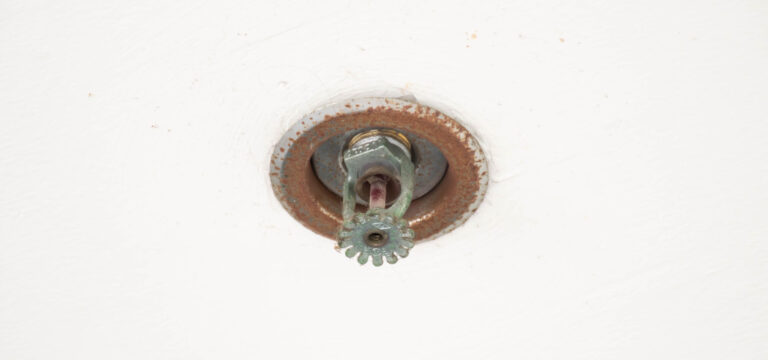
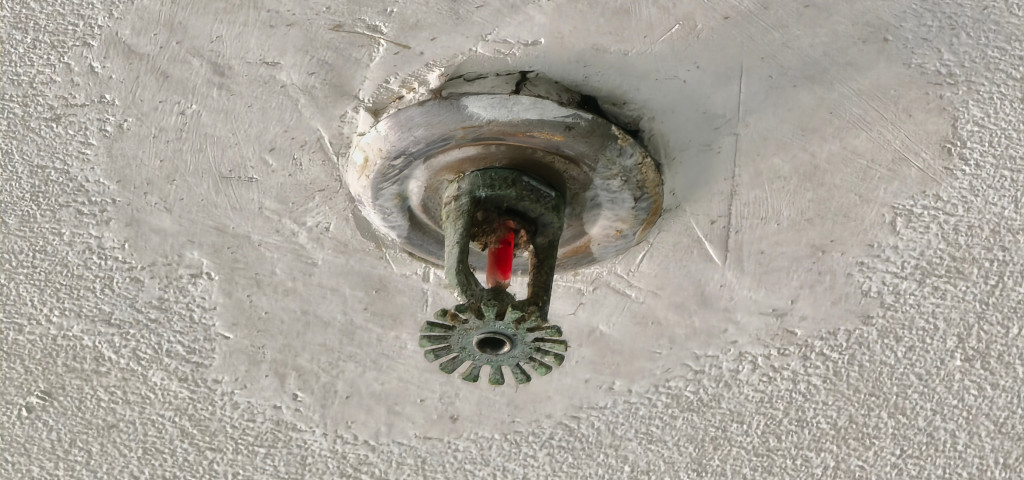
A fire sprinkler has activated, been damaged, painted, or otherwise needs replacement. Finding a replacement fire sprinkler that looks the same isn’t enough: seemingly similar sprinklers can have different K-factors, temperature ratings, response characteristics, spray patterns, and other features. Fire protection compliance and safety require the right match.
Fortunately, a straightforward process can identify almost any sprinkler and find either an exact replacement or an appropriate substitute—whether the original is still manufactured or has been discontinued.
Why this matters
The National Fire Protection Association’s NFPA 25 standard requires replacement sprinklers to have the proper characteristics for their intended application. The 2026 edition (5.4.1.3) specifically lists the sprinkler’s style, orifice size and K-factor, temperature rating, coating (if any), deflector type, and design requirements.
That means you shouldn’t simply replace a sprinkler with one of the same size, appearance, or brand. Installing the wrong replacement leaves the system out of compliance and means the new sprinkler responds or discharges water differently, likely compromising protection.
The easiest way to replace a sprinkler is to match the old one exactly. But this isn’t always possible, and first, you need to identify what you have.
The fix
Step 1: Look for a sprinkler identification number (SIN).
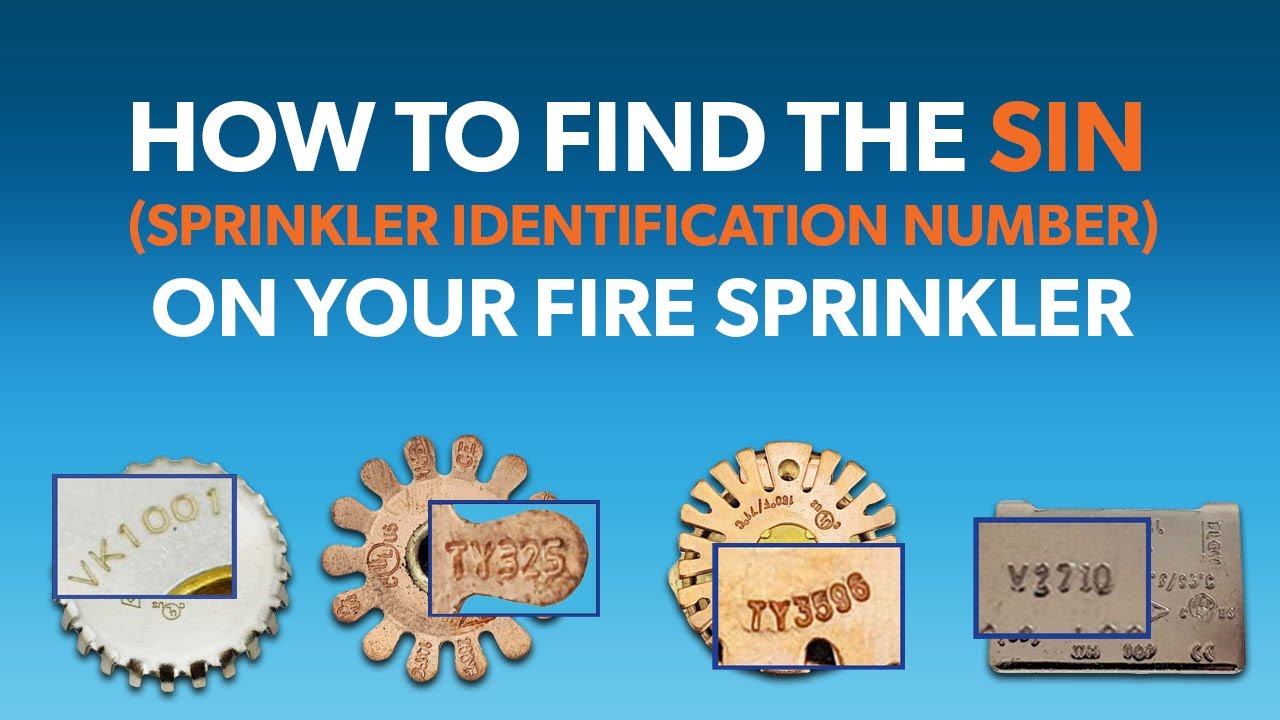
Sprinklers manufactured after January 1, 2001, must have a sprinkler identification number (SIN). The SIN is nearly always stamped on the sprinkler’s deflector, although a small number of sprinkler designs place it elsewhere, and starts with one or two letters identifying the manufacturer, followed by several numbers. Key manufacturer codes are R or RA (Reliable), SS (Senju), TY (Tyco), V (Victaulic), and VK (Viking).
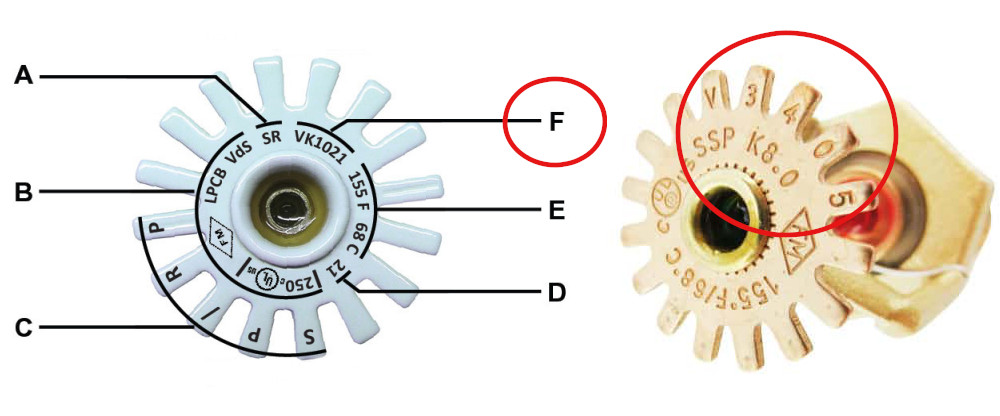
A SIN identifies the sprinkler’s manufacturer and specific model, including most of its key performance characteristics. You can enter it into the QRFS QuickFinder or use the search bar at the top of this page to find all currently manufactured sprinklers from the five major manufacturers, plus some remaining discontinued models or replacements. Check out this video for more detail on identifying a SIN:
If the exact model is still available, replacement is simple: select it and match the characteristics of the old sprinkler that the SIN doesn’t specify; it’s usually just the sprinkler’s temperature rating and finish.
But a SIN can also belong to a discontinued sprinkler. If the sprinkler has a SIN but the exact model is no longer available, skip to Step 3.
Step 2: If there is no SIN, identify the old sprinkler from its markings.
SINs weren’t required until 2001, so older sprinklers instead use various manufacturer names, logos, model numbers, and other markings on their frames and deflectors.
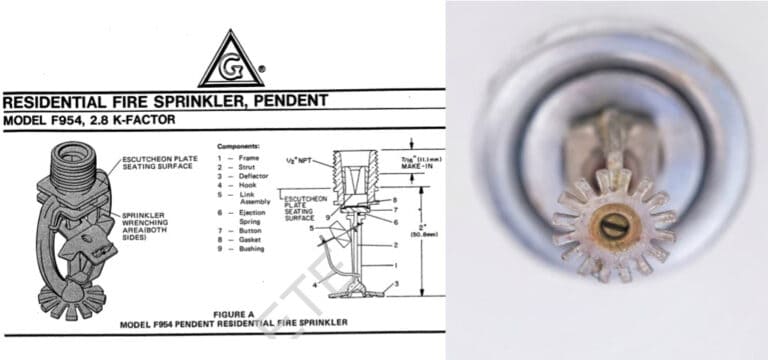
Look closely at both the frame and deflector and write down every marking you can find. For example, older Central sprinklers may have “CSC,” Star sprinklers may have a star-shaped logo, and some Gem and Grinnell sprinklers have a “G” inside a triangle. Also record any model designations or other letter-and-number codes you find, such as Central’s “ELOC,” Star’s “LD-2,” or Gem’s “F927”—these codes are critical for locating the sprinkler’s original data sheet and identifying its performance characteristics.
Search those markings online to identify the manufacturer and model, then locate the old manufacturer’s data sheet. QRFS can also help you identify an unknown sprinkler from clear, close-up photos of its deflector and both sides of its frame.
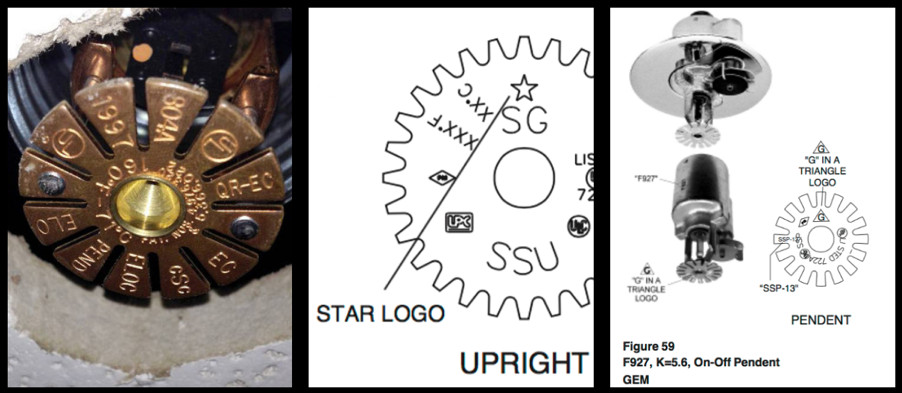
Sometimes, the trail leads to a current manufacturer. For example, Tyco acquired or incorporated product lines from companies including Gem, Star, Central, and Grinnell, and later redesignated some older sprinklers as Tyco models. For example, Tyco’s current TY3111 sprinkler is a redesignation of the older Star S1800 and Gem G3111 sprinklers.
Step 3: If you can’t find an exact replacement, match the sprinkler’s performance characteristics.
An exact currently manufactured model is usually the easiest replacement. But NFPA 25 does not require the same make and model when it is unavailable.
Instead, identify the old sprinkler’s characteristics from its data sheet and find a new, listed sprinkler suitable for the same application. NFPA 25 requires replacement sprinklers to match the following 6 characteristics:
(1) Style
(2) Orifice size and K-factor
(3) Temperature rating
(4) Coating, if any
(5) Deflector type (e.g., upright, pendent, sidewall)
(6) Design requirements
These requirements cover a lot of ground, and past and present sprinkler characteristics don’t all fit neatly into these six categories. So, key practical steps include:
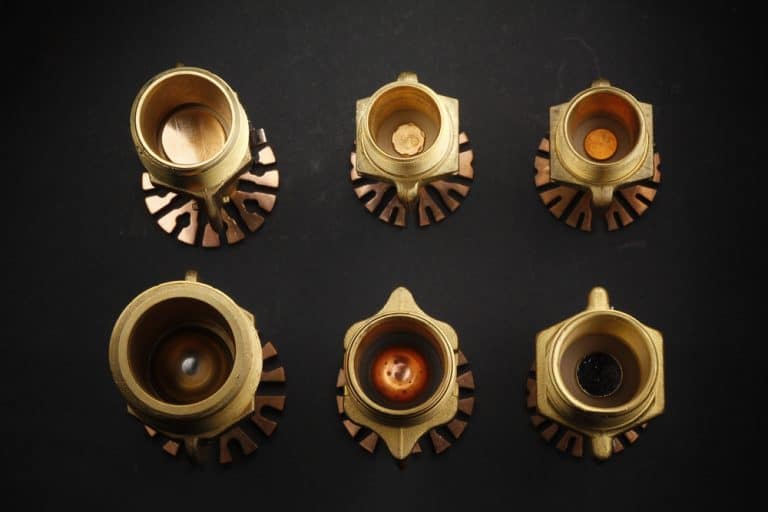
(1) Match the sprinkler orientation (deflector type) and installation style: Sprinklers may be upright, pendent, horizontal sidewall, or vertical sidewall. Uprights are installed exposed, while pendent and sidewall sprinklers may be exposed, recessed, flush, or concealed, depending on the model. A recessed sprinkler has part of its body set into a finished surface; a flush sprinkler is designed so that all or part of its body is above the lower plane of the ceiling; and a concealed sprinkler is recessed into a finished surface and hidden by a cover plate. Recessed, flush, and concealed sprinklers must be installed with the specific escutcheons or cover plates required by their listing.
(2) Match the K-factor or orifice size: Sprinklers made before the late 1990s were commonly identified by nominal orifice size, such as 1/2 in. or 17/32 in., roughly corresponding to 5.6 and 8.0 K-factors, respectively. Sprinklers are now standardized by nominal K-factor, such as 5.6K, 8.0K, 11.2K, or 16.8K. Each value describes the sprinkler’s discharge characteristics, and some transitional and later data sheets list both values.
(3) Match the connection size: Fire sprinklers commonly have 1/2-in. or 3/4-in. NPT connections, while some larger or specialty sprinklers use 1-in. NPT. The size identifies the sprinkler’s threaded connection to the system fitting. Dry sprinklers specifically may have 1-in. or 1-1/4-in. NPT connections or larger grooved connections.
(4) Match the sprinkler’s temperature rating: Sprinklers are designed to operate at specific temperatures, such as 135°F, 155°F, 175°F, 200°F, or 286°F, depending on the expected ambient temperature and application. The replacement sprinkler must have the appropriate temperature rating for the location and match the original where required.
(5) Match the thermal response type: Sprinklers may be standard response or fast response; fast-response types include quick response, residential, and ESFR sprinklers. Response type indicates how quickly the sprinkler’s thermal element reacts to heat, and replacement sprinklers must have the appropriate response characteristics.
(6) Match the thermal element: Sprinklers may use a glass bulb or fusible link as the heat-responsive element. Either type may suit many applications, but fusible-link sprinklers are often used where broken glass could create a contamination hazard, such as food-processing facilities.
(7) Choose the finish and match any listed corrosion-resistant coatings: Sprinklers are available in finishes such as brass, chrome, white, or black, and some models have listed corrosion-resistant coatings such as wax, polyester, or nickel-based materials. You can match a decorative finish for appearance, but the replacement sprinkler must maintain a corrosion-resistant coating where it is required.
(8) Match the coverage type: Sprinklers may be listed for standard coverage or extended coverage, which determines the area and spacing they are permitted to protect. Sprinklers must be replaced with sprinklers having the appropriate coverage listing for the existing design.
(9) Match the sprinkler type, application, and any special listing requirements: Sprinklers are designed and listed for different hazards, locations, and system conditions. For example, a replacement needs to be the same type, such as standard spray vs. conventional/old-style, residential, ESFR, CMSA, dry barrel, or window sprinkler. Some sprinklers also have specialty listings for applications such as combustible concealed spaces, attics, institutional/high-security areas, or potable-water systems requiring lead-free components. These designations are not automatically interchangeable; the replacement must be suitable and listed for the existing application.
Some unusual sprinklers require additional analysis. For example, NFPA 25 provides special replacement options for older residential sprinklers with K-factors that are no longer manufactured. When there isn’t an obvious equivalent, consult a fire protection professional rather than guessing.
Step 4: Don’t forget listed sprinkler accessories.
Concealed sprinkler cover plates and listed escutcheons used with recessed or flush-style sprinklers are part of listed sprinkler assemblies. They aren’t interchangeable.
If you replace the sprinkler with a different model, use the cover plate or listed escutcheon approved for the new sprinkler. And if a required listed accessory for an obsolete sprinkler needs replacement but is no longer available, NFPA 25 requires replacing the sprinkler and accessory. Also, be sure to purchase an installation wrench that matches the new sprinkler.
Again, use the QRFS QuickFinder to identify currently manufactured sprinklers, compatible cover plates, escutcheons, and sprinkler wrenches by SIN. If there’s no SIN—or the sprinkler is obsolete—contact QRFS for help.
Product recommendations
FAQs
No. An exact replacement is simplest, but NFPA 25 permits another sprinkler with the proper characteristics for the application when an exact model is unavailable.
Look for logos, manufacturer names, model numbers, and other markings on the frame and deflector. Use them to identify the model and locate its old data sheet—you can contact QRFS for help.
Only if it is listed as compatible with that specific sprinkler. Cover plates and recessed or flush escutcheons are specific to listed sprinkler assemblies; physical fit alone does not establish compatibility.