The problem
Sprinklers are meant to be unobtrusive until they’re needed in a fire—tucked into ceilings or walls or sitting atop pipes in high, open ceilings. But sometimes, they can get in the way. Whether mounted under stairwells, in tight utility rooms, or in high-traffic areas, certain sprinklers can become routine targets for broom handles, ladders, raised arms, or even someone’s head.
One wrong bump could break the heat-sensitive element and unleash thousands of dollars in water damage, not to mention the risk of physical injury. Failing to protect exposed fire sprinklers and people from hitting them in vulnerable areas can be a costly oversight that could get flagged by inspectors—or worse, flood your property.
Why this matters
NFPA 13: Standard for the Installation of Sprinkler Systems requires system owners to protect their sprinklers in places where these parts are likely to get hit:
From the 2025 edition of NFPA 13
16.2.6 Sprinklers subject to mechanical injury shall be protected with listed guards.
More details from the standard:
A sprinkler guard can minimize the physical damage caused by impact from a variety of objects […] Guards are also useful in protecting people from injury by sprinklers in areas where clearance is low, such as under a stairwell.
So, not protecting sprinklers with sprinkler head guards, aka sprinkler cages, in high-traffic areas can result in a system deficiency tag. Worse, a low sprinkler’s deflector could injure someone, or an impact might break the heat-sensitive element, causing the sprinkler to activate.
The fix
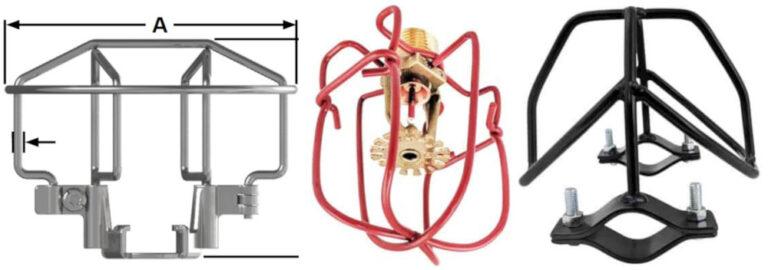
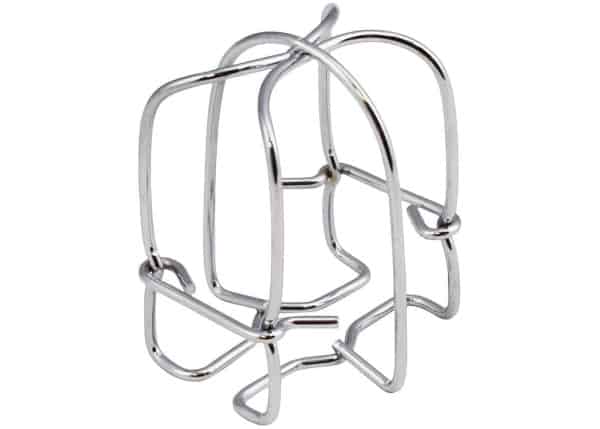
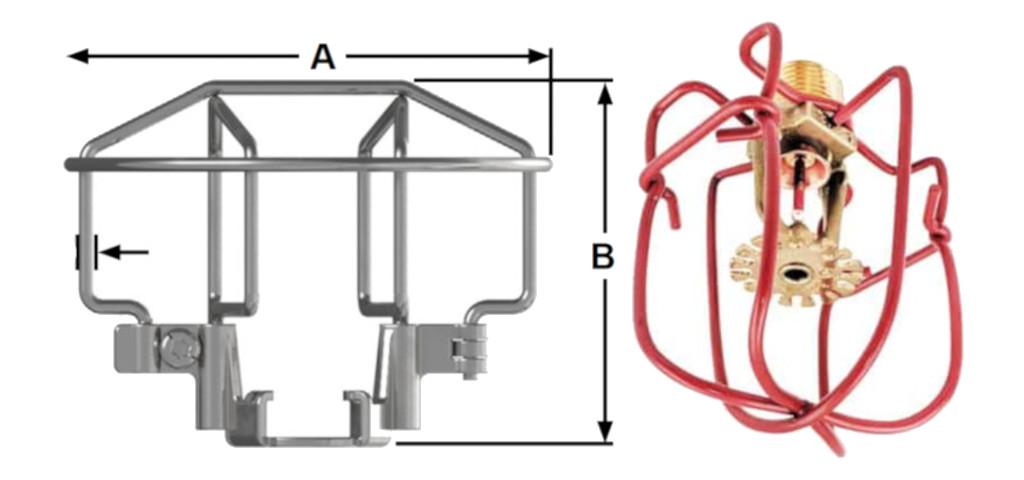
NFPA 13 requires the use of listed head guards to prevent sprinkler damage, which are almost always standard head guards. Usually made of durable metal wire, standard guards attach to a sprinkler’s base and handle light to medium-hard impacts, such as accidental bumps from people or objects being carried.
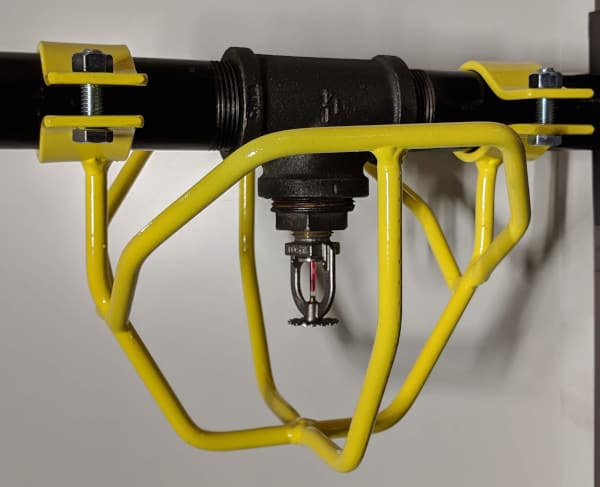
For areas with greater risks—like warehouses, gyms, or loading docks—heavy-duty guards provide a wider crush zone and can absorb higher-impact hits from things like forklifts or fast-moving objects.
Important: Again, NFPA 13 requires using listed head guards, and most heavy-duty guards and some standard sprinkler cages are not listed. However, your authority having jurisdiction (AHJ) may approve their use after assessing your situation. Always check with your AHJ before installing unlisted guards.
Buyer’s guide
1. Evaluate the risk. In most facilities, standard head guards are sufficient to handle occasional bumps from people or carried objects. Prioritize getting a listed guard that matches your sprinkler model.
2. For high-impact zones, consider heavy-duty guards made to handle faster and harder contacts. Read this guide to learn about taking appropriate measurements and more.
3. Check with your AHJ before installing any unlisted guards.
Product recommendations
Shop sprinkler cages at QRFS
If you need sprinkler guards, check out our selection of:
- Standard head guards, including listed models and guards with baffles
- Heavy-duty head guards
Have questions or need help placing an order? Contact us!
FAQs
Are sprinkler head guards required?
Possibly—NFPA 13 only requires them if your sprinklers are in locations where they’re routinely exposed to likely impacts.
What’s the difference between a standard and a heavy-duty head guard?
Standard guards are smaller, less sturdy, and handle light to medium-hard bumps. Heavy-duty guards are bigger, designed for higher-risk environments, and can take harder hits—but they may not be listed, so check with your AHJ before using them.
Are unlisted guards allowed?
They might be—but only with the authority having jurisdiction’s approval. Codes and standards provide AHJs with discretion to assess an “alternative material or method” and approve it if it still achieves the fire protection goals. Always ask before installing unlisted sprinkler cages.