The problem
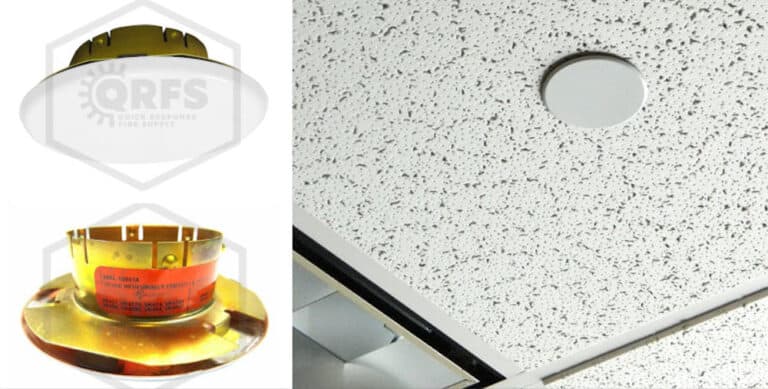
Uh oh—the hole around your concealed sprinkler is bigger than the cover plate that’s supposed to hide both the sprinkler and the hole. Now, you’ve got an ugly gap staring down from the ceiling (or wall).
Sometimes, an oversized hole was intentionally cut to provide extra annular space for sprinkler movement in earthquake-prone areas. But often, an installer simply cut it too large by mistake. Either way, the result is the same: a concealed sprinkler installation that isn’t concealed at all. Instead of a clean, unobtrusive appearance, you’re left with an exposed opening that looks unfinished and sloppy.
Why this matters
NFPA 25, the sprinkler system inspection, testing, and maintenance standard, only explicitly requires that cover plates be replaced if they are missing, damaged, or painted, corroded, or loaded in a way that affects performance. The rules don’t mention extra space around covers. So, a gap around a cover plate is usually primarily an aesthetic issue—but that doesn’t mean it should be ignored.
Regardless of compliance considerations, building owners expect concealed sprinklers to look clean and finished. An exposed gap may raise red flags during building walkthroughs or tenant evaluations — and it undermines the clean, professional appearance of the structure in any setting. System owners and designers chose concealed sprinklers for a reason. A visible gap defeats their purpose.
The fix
You have two practical options to solve this problem—at least, without doing renovations to the ceiling or walls.
Option 1: Use a larger matching cover plate
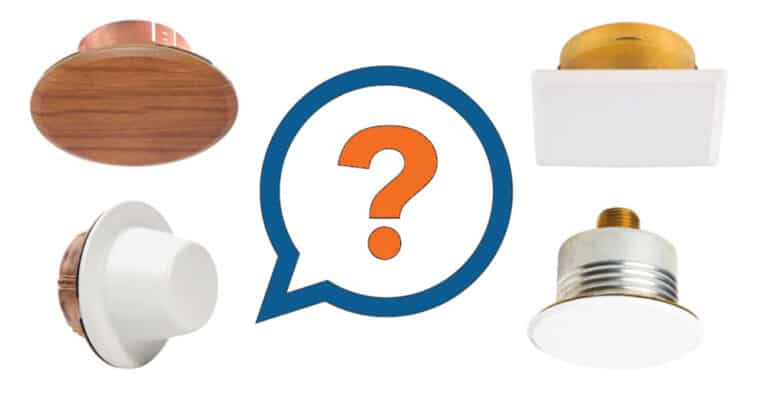
Many concealed sprinklers are compatible with more than one cover plate model — and some of those covers have larger outer diameters. For example, an older Viking VK404 concealed sprinkler can pair with:
- A Mirage cover plate with a 2-3/4″ outer diameter
- A Mirage cover plate with a 3-5/16″ outer diameter
If your sprinkler model allows multiple cover options, check whether a larger-diameter plate will fully cover the opening.
Option 2: Install a trim ring or a Kydex ring
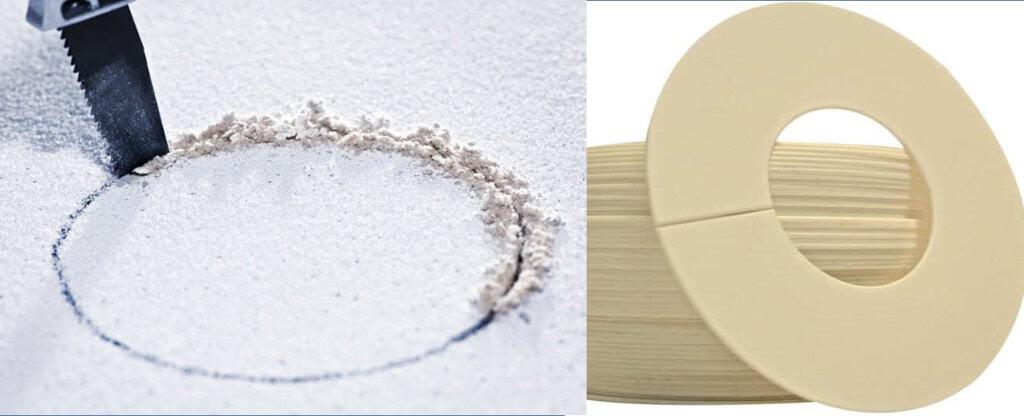
If a larger cover plate that’s compatible with your sprinkler isn’t available, trim rings and Kydex rings are specifically designed to fill oversized gaps.
- Metal trim rings install under and around cover plates or escutcheons to hide excess space.
- Kydex rings are cuttable plastic rings that do the same thing and can be customized on-site to match unique openings.
Both solutions restore a clean, finished appearance without recutting and patching drywall or replacing the cover plate or sprinkler.
Buyer’s guide
Start by verifying your sprinkler model and its listed cover plate options. If your concealed sprinkler is compatible with multiple cover plate sizes, choose a larger-diameter cover that fully hides the opening.
If no bigger compatible cover plate exists, use a trim ring or Kydex ring to fill the excess space. Metal trim rings are ideal when you need a durable, finished look with a standard opening size—models with larger inner diameters, typically 2″ to 2-2/5″, work well with most cover plates. Cuttable Kydex rings are best when you require on-site customization.
Product recommendations
FAQs
Will an oversized hole fail an inspection?
In most cases, the issue is cosmetic. NFPA 25 does not explicitly require complete coverage of a penetration. Still, missing or damaged cover plates must be replaced, along with those that are painted, corroded, or covered in dust—if those conditions are detrimental to sprinkler performance.
Can I just patch the ceiling and cut a new hole?
Yes, but that requires drywall repair, repainting, and potential downtime. A larger compatible cover plate or trim ring is a faster and more cost-effective solution.
How do I know if a larger cover plate will fit my sprinkler?
Check the sprinkler manufacturer’s compatibility listings found on the sprinkler’s data sheet, via the QRFS QuickFinder, or on individual QRFS product pages. Many concealed sprinklers accept multiple cover plate models with different outer diameters.
What’s the difference between a trim ring and a Kydex ring?
Metal trim rings have fixed dimensions and provide a durable, more professional finish. Kydex rings are cuttable plastic, allowing you to customize the inner diameter to match irregular openings.