


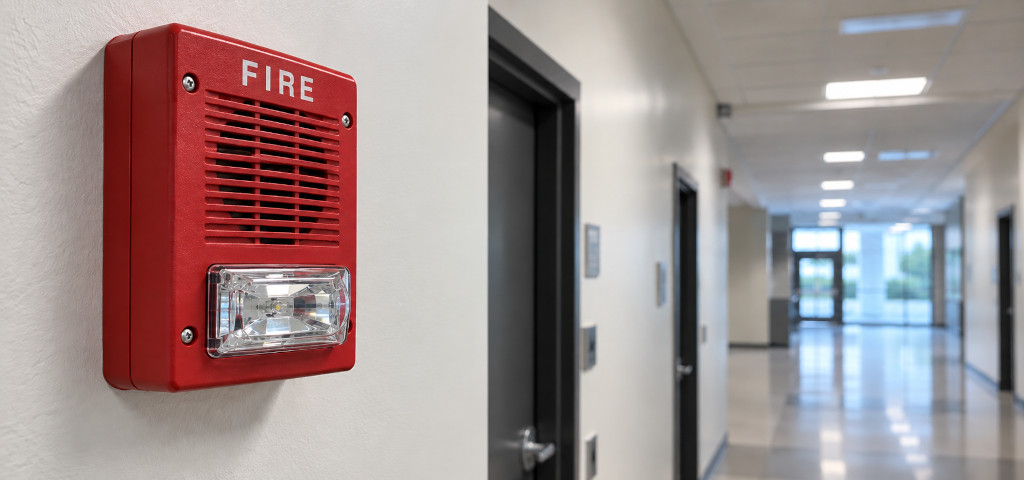
Fire alarm tests with STIPA meters ensure notification intelligibility
Fire alarm systems and other notification systems don’t always just rely on blaring alarms to let people know about emergencies. Voice messages, both pre-recorded and live, can provide specific instructions to building occupants. But as with all technology in fire protection and life safety, reliability is key. It’s not enough for a system to reliably broadcast a message, or even for it to be loud enough. People need to understand a message for it to be effective. Intelligibility testing is an important part of fire alarm and mass notification system design where voice messages are used.
This article provides a guide to STIPA and other intelligibility topics, as described in NFPA 72: National Fire Alarm Signaling Code (2025 edition). We’ll cover:
- An introduction to EVACS and MNS
- STIPA and other measurement standards for intelligibility
- Steps for measuring intelligibility
- The test schedule for intelligibility testing
QRFS now offers specialized equipment for intelligibility testing of fire alarm systems. Check out our range of sound level and STIPA tools!
EVACS and MNS use voice to communicate about emergencies
An emergency voice/alarm communications system (EVACS),is a type of emergency communication system (ECS) that uses voice broadcast over loudspeakers to communicate two pieces of information:
- That an emergency is happening
- What people need to do about it—shelter in place, evacuate, etc.
EVACS messages can be pre-recorded, machine-generated, or live broadcasts by building staff or first responders. A basic EVACS is used in fire alarm systems, but voice-based technology is also applied in mass-notification systems (MNS) another type of emergency communications system. An MNS has applications for many kinds of emergencies, including weather events, earthquakes, fires, active shooter situations, and more (NFPA 72: 3.3.99.1.3).
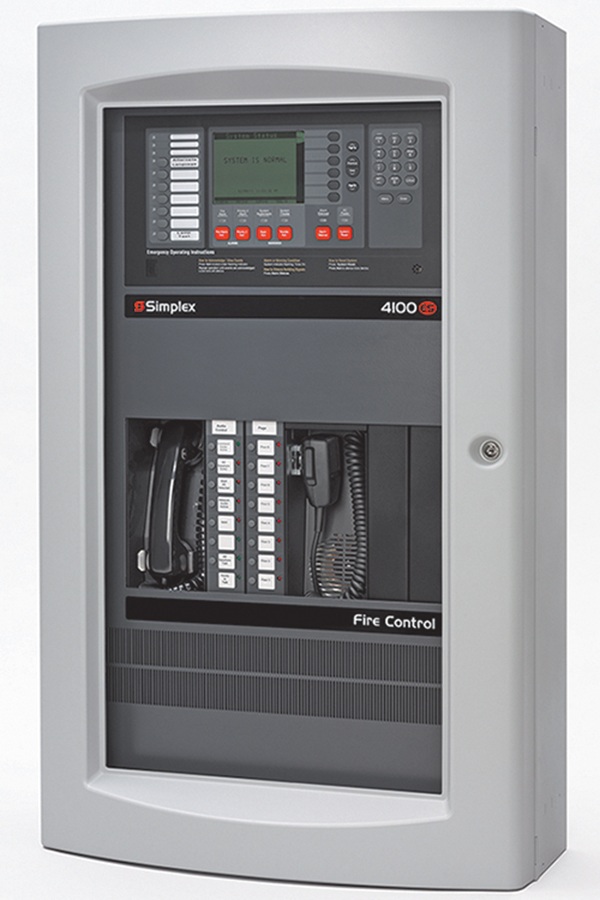
An EVACS message may sound like this example of an option for a Simplex 4100U/4100ES Voice Evacuation System.
EVACS are not necessary in every building, or even most buildings. NFPA 72 does not provide a list of occupancies where they are required; this is found elsewhere in codes. For example, the International Fire Code (IFC, 2024 edition, section 907) names high-rises, malls, educational facilities, and some others as requiring EVACS. These systems can also be included as part of a Fire Safety and Evacuation Plan (IFC 404) that is evaluated and approved by the authority having jurisdiction (AHJ). The AHJ may also, at their discretion, decide to require one (NFPA 72: 24.3.3-4). In general, large assembly areas, high-rises, and large industrial, commercial, or institutional facilities are typical use-cases (NFPA 72: 3.3.99.1.2).
Again, NFPA 72 does not require an EVACS. However, it does set minimum requirements for the installation and functionality of these systems, including audibility and intelligibility. People need to hear and understand messages broadcast over an EVACS (24.4.2.2.1). We intuitively understand audibility—the message needs to be loud enough. But intelligibility is a different concept, and harder to measure objectively.
Measuring intelligibility: STIPA and other standards
In the field of acoustics, speech intelligibility is a complicated topic. Loudness, whose units are decibels, is measured easily with a sound meter. But you’ve probably experienced a message over a loudspeaker (or music at a concert) that can be easily heard but still hard to understand.
As SDM Magazine describes, reverb, distortion, and the ratio of signal to noise in the broadcast all affect our ability to comprehend messages over public address systems. Intelligible EVACS messages are very important goals in fire protection and life safety systems, and professionals need a consistent way to gauge intelligibility. Yet, it’s hard to put a number on the ability of a human brain and ear to translate a sound into a coherent message.
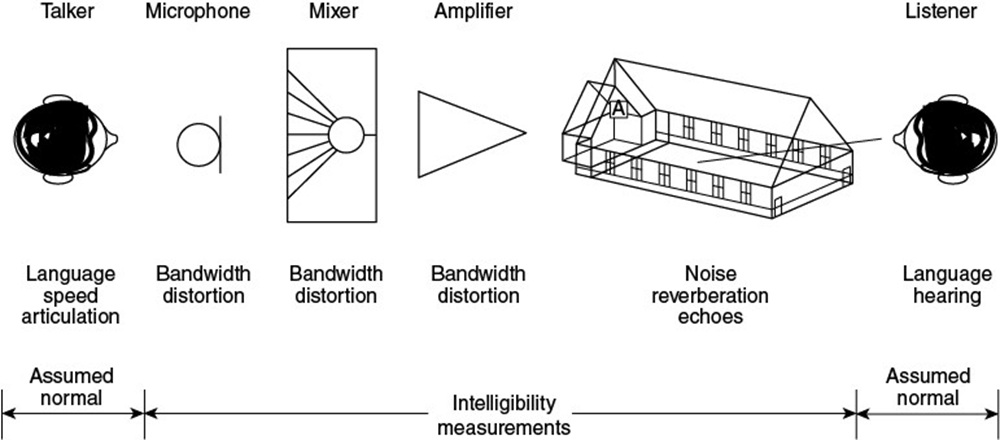
There are two broad methods of assessing intelligibility: subject-based and instrument-based techniques (NFPA 72: D.2.4.2).
Subject-based (or “subjective,” i.e., human-based) techniques are the simplest methods and rely on asking listeners if they can understand words through the PA system. There are formal, standardized protocols for these tests, such as the Phonetically Balanced Test and the Modified Rhyme Test. The National Training Center explains that these protocols have the advantage of not relying on advanced, expensive equipment. But these assessments are still predictions based on the experience of the listeners used for the test.
The preeminent instrument-based protocol for measuring intelligibility is the Speech Transmission Index (STI). Engineers at the Netherlands Organization of Applied Scientific Research (TNO) developed this protocol as an objective measure of speech intelligibility. A special case of STI for public address (PA) systems is called STIPA: Speech Transmission Index for Public Address. STIPA is perhaps the most popular instrument-based protocol for measuring intelligibility. The Speech Intelligibility Index (SII) is another instrument-based protocol (NFPA 72: D.2.4.4).
Note that NFPA 72 does not require the use of any particular method for assessing intelligibility. It doesn’t even require quantitative, instrument-based methods to be used, saying: “Quantitative measurements shall not be required. Quantitative measurements shall be permitted” (18.4.12.5-6). While different AHJs may have a preference, STIPA is a widely used method for quantitative testing. Several of the researchers involved in developing the STIPA protocol later founded Embedded Acoustics, which manufactures STIPA testing equipment under the Bedrock brand.
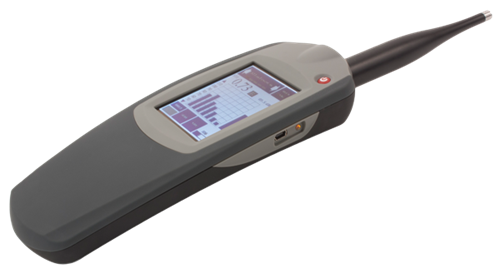
The protocol and standards for carrying out STI and STIPA measurements are laid out in the International Electrotechnical Commission’s standard IEC 60268-16, Sound system equipment – Part 16: Objective rating of speech intelligibility by speech transmission index. This document has a lot of highly technical information, but modern STIPA equipment is straightforward to use: a specially modulated pink-noise signal audio file is played through the PA system into different areas covered by the EVACS, and the STI receiving device analyzes the sound quality and produces a score from 0 to 1, with zero being the worst. A score is collected in different rooms in the building during acceptance testing of the system. More on that next.
Performing STIPA tests
As mentioned, there are multiple methods used to test intelligibility in voice-based notification systems like an EVACS. Some are quantitative, and STIPA is perhaps the most common of the quantitative protocols. Whether you use a STIPA meter or another method, there are two basic steps to gathering voice intelligibility data about an EVACS:
- Designation of acoustically distinguishable spaces (ADSs) and measurement locations within each ADS
- Performing the test in each ADS to generate a score
We’ll focus here on the STIPA test for simplicity.
Designation of acoustically distinguishable spaces
A key concept to understand is the acoustically distinguishable space. Facilities that use an EVACS are usually quite large with multiple levels. Thus, for both acoustic design and intelligibility testing, it’s essential to break the space into useful chunks. Each chunk of the building has different acoustic properties; one could house loud equipment constantly in use, while another might be prone to echo and reverb. Designers would approach these spaces differently, selecting different broadcast equipment and programming different settings on loudspeakers for each. This is the root of the concept of an ADS.
NFPA 72 says that an ADS (3.3.6) is a notification zone (or subdivision of one) within an emergency communication system defined based on physical boundaries (such as walls) or “imaginary” boundaries defined based on sonic or other environmental properties of the space. System designers draw boundaries for ADSs during the design stage (18.4.12.1).
At the same time, designers also have to decide whether each ADS requires intelligibility or not. Though it might sound strange, not every ADS requires it (18.4.12.3), and the designers, along with AHJs, use their expertise to determine which zones do and don’t need intelligibility. They might say, for example, that it’s impractical to achieve intelligibility in a space where loud machinery is constantly in use (D.2.3.1.9). Note that in every ADS, an emergency message needs to be audible (24.4.2.2.3). So, people always need to be able to hear it, even if they can’t understand it.
While some spaces are small enough to require only one intelligibility measurement, an ADS is often large enough to require multiple measurements. Section D.3.7 of NFPA 72 has some specific guidelines for selecting these points, but they are generally about 40 feet apart. Measurement locations should be marked on the plans, so future tests can use the same locations.
STIPA tests are performed zone-by-zone in each ADS that requires intelligibility.
Performing the test and generating a score
Modern STIPA equipment makes performing a basic intelligibility test straightforward. At its most basic, the test consists of four steps:
- Playing a specially modulated pink-noise signal through the loudspeaker system
- Running an analysis program using the handheld STIPA meter
- Recording the score for each ADS
- Determining whether the EVACS overall passes or fails the intelligibility test
The audio file sounds bizarre to human ears but simulates human speech for the purposes of the STIPA receiver. Where the EVACS will use prerecorded messages, the file is played through the main control panel. However, many EVACS are designed to broadcast live messages through a handset—a process that can’t be tested by just plugging in a jack and introducing the STIPA test signal directly into the system.
The test signal must be replayed acoustically into the microphone or handset, and a piece of equipment called a TalkBox is used to do it. “The TalkBox replaces the human talker that is normally part of the speech transmission chain,” Bedrock explains. The TalkBox should be positioned where the speaker’s head would be, and a tripod can be used to achieve this placement.
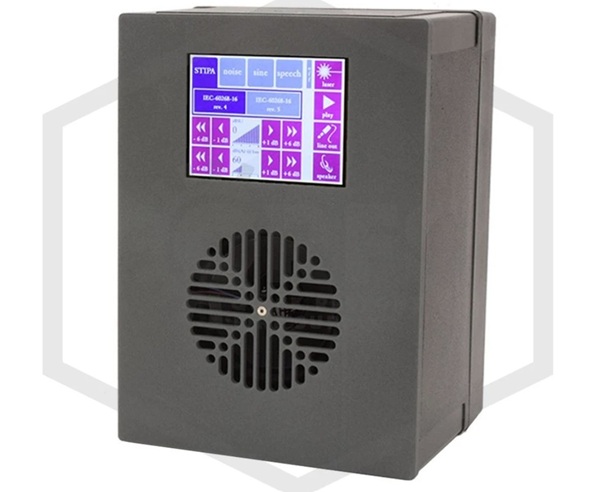
This video shows what the pink noise file sounds like and illustrates the basic use of the STIPA meter:
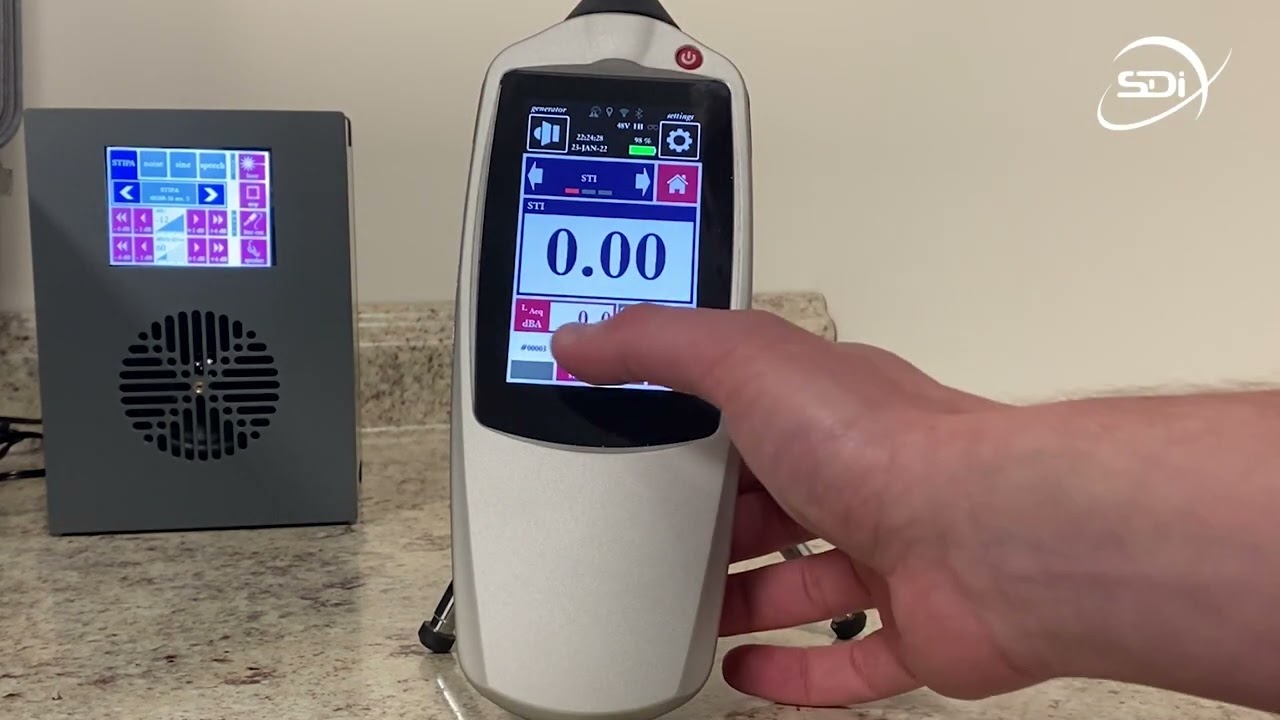
After the STIPA meter finishes running its automated program, it provides a score ranging from 0 to 1. This score must be recorded at each measurement point in each ADS where intelligibility is required. Once these scores are collected and recorded, some calculations are required on the part of the designer; an ADS is considered to have acceptable intelligibility if:
- 90% of the measurement locations in the ADS have an STI score of 0.45 or greater, AND
- The average score in the ADS is at least 0.5
The test schedule for EVACS and MNS intelligibility
Intelligibility analysis for EVACS systems is performed as an acceptance test for new systems (NFPA 72:Table 14.4.3.2, item 22). If the system or environment undergoes significant changes, additional testing may be warranted (14.4.12.1 commentary). EVACS (recall: fire-only systems) should be tested annually for correct operation. Verification of intelligibility is implied to be part of that testing, though the standard doesn’t strictly require any kind of quantitative measurement for this. NFPA 72’s explanatory text for section 14.4.12.1 addresses this:
Systems must be periodically tested for intelligibility, but measurements might not be required. Item 22(2) of Table 14.4.3.2 on audible textual notification appliances (loudspeakers) requires an annual periodic test of the operation of the notification appliances. If there are changes to the building or the system — all of which could affect intelligibility — additional testing might be warranted.
However, a voice-based system used as part of a mass-notification system (MNS; recall: multi-purpose) does have an annual intelligibility test requirement:
Table 14.4.3.2 requires annual measurement of the alert or evacuation tone sound pressure level with a meter and verification that the audible information is distinguishable and understandable.
As we mentioned in our introduction of STIPA, NFPA 72 does not explicitly require any one measurement method, or even a quantitative method. This applies to annual tests, as well as acceptance tests. But while this it does not mandate the annual use of a STIPA meter for MNS tests, the AHJ or other stakeholders may have that requirement.
STIPA testing ensures intelligibility in EVACS and MNS systems
Emergency communications systems, including in-building fire emergency voice/alarm communications systems and mass notification systems, are invaluable life safety tools. Recorded and live messages provide useful information to occupants; shelter-in-place or evacuation instructions can provide vital information that is specific to a situation and building zone. But these messages can’t do their job if they can’t be understood. And STIPA is a widely-used and effective method to ensure intelligibility during initial acceptance tests and ongoing tests of these systems.
QRFS has the equipment needed to ensure a fire alarm or mass-notification system is both audible and intelligible. Check out our range of sound level and STIPA tools!
Do you have questions about QRFS products or need a brand or item that’s not in our online inventory? Just call us at (888) 361-6662 or email support@qrfs.com.
This blog was originally posted at blog.qrfs.com.
