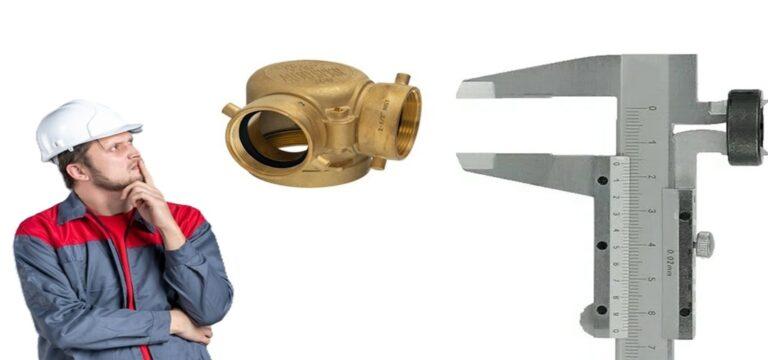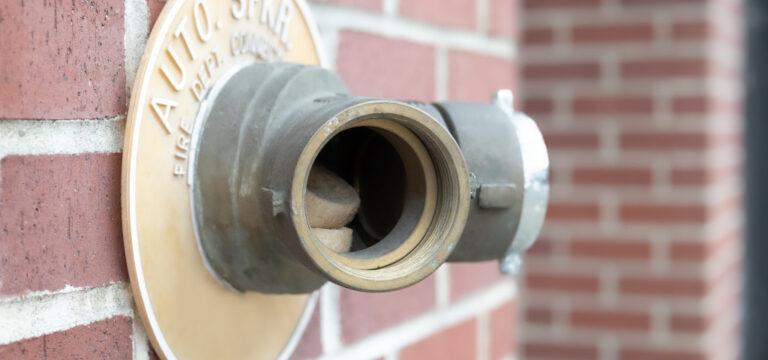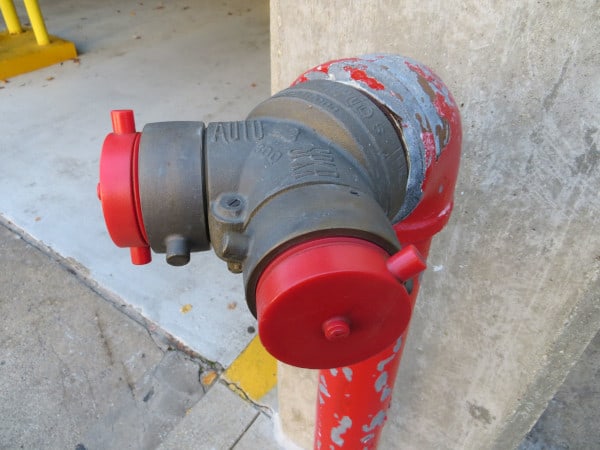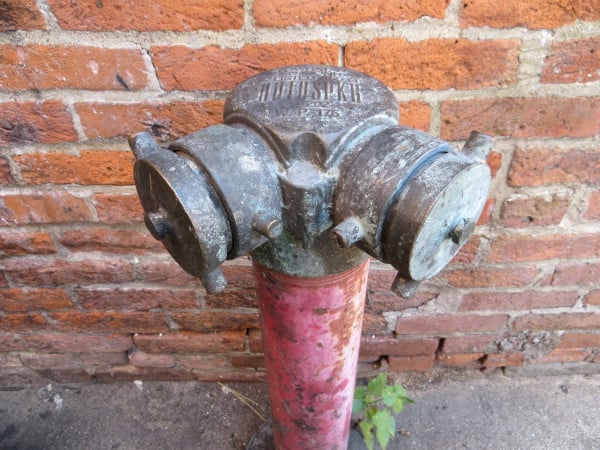
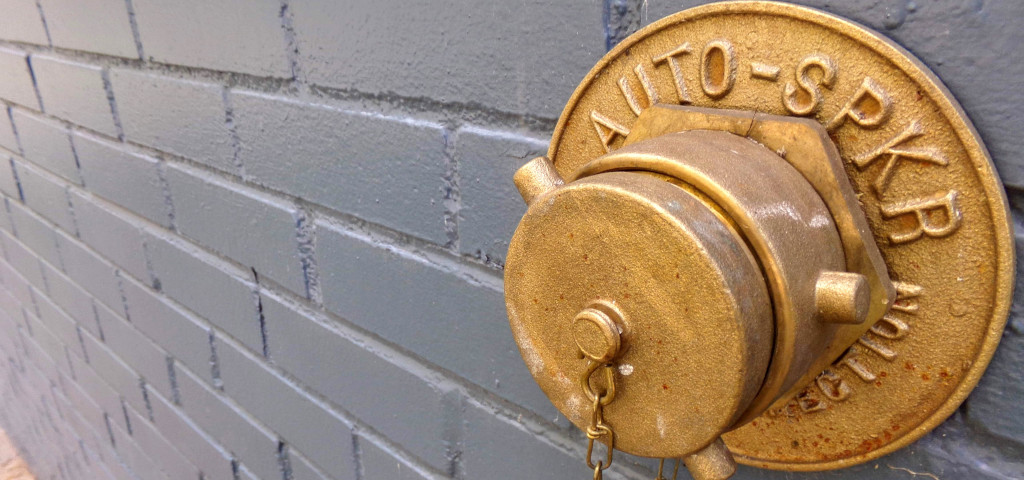
The problem
You need a fire department connection (FDC) plug, swivel, or body that matches the local thread standard firefighters use to connect their hoses. Buy the wrong plug, and it won’t fit—you’ll have to reorder the right one to get compliant and protect the FDC inlets. Worse, if you get the wrong threads on an FDC swivel inlet or assembled body, firefighters may not be able to connect their hoses during an emergency.
The problem is that while one thread standard is fairly common in the US, many other jurisdictions also use other locally specific standards with different sizes and names. You need to know what your local fire department requires before ordering!
Why this matters
FDCs let firefighters pump water into sprinkler and standpipe systems to supply or supplement the system’s pressurized water supply. That is why the NFPA 13 sprinkler installation standard, the NFPA 14 standpipe installation standard, and the NFPA 25 inspection, testing, and maintenance standard have various requirements for fire department connections.
First, system owners and managers must get an FDC with the right connection types and caps or plugs, as mandated in NFPA 13 and NFPA 14. For example, NFPA 13 identifies the default FDC connection as “2-1⁄2 in. … NH [aka NST],” but stipulates that different thread standards and sizes can be “approved” by local authorities having jurisdiction. This necessary AHJ approval also applies to FDC caps and plugs. (2025: 16.12.3.1, 16.12.3.1.1, 16.12.3.2, 16.12.3.3)
After an FDC is installed, section 13.8.1 of NFPA 25 (2026) mandates quarterly inspections to check, among other things, for undamaged, present, and properly functioning couplings, clappers, and plugs or caps. These deficiencies can require ordering a replacement part with the right thread standard.
Getting the wrong size and threads means non-compliance with standards and codes, and it may prevent firefighters from hooking up hoses during a fire. It also causes returns, delays, and unnecessary hassle.
The fix
The simplest way to get the right FDC body, swivel, or plug is to ask your local fire department, another AHJ official, or a fire protection pro what thread standard is required. There are two potential things to know: the name of a thread standard and/or the connection’s outer diameter (OD) by threads per inch (TPI).
The most common NFPA-default FDC thread size and standard is 2-1/2” NST/NH, which has a 3.0686” OD and 7.5 TPI.
But many jurisdictions use different standards, such as 3” nominal New York Fire Department Thread (NYFD: 3.630” OD x 8 TPI), Chicago Fire Department Thread (CFD: 3” OD x 7.5 TPI), and “Louisville thread”(3.125″ OD x 6 TPI), among numerous others.
Some standards have recognizable names that may be stamped on the swivel inlet, such as “NYFD” or “NST.” Others are just called by their semi-official geographic names, such as “Cleveland thread.” Different names can even describe identical dimensions! For example, NYCORP Thread is the same as “Toledo thread” at 3.0” OD x 8 TPI, while “Phoenix thread” is the same as “Pittsburgh thread” at 3.062” OD x 6 TPI.
This all may seem unnecessarily complex—and there is a complicated history behind this variance that you can read about here. However, determining which size and thread you need is straightforward:
- Ask your local AHJ (the fire department is a good first stop) or a qualified local fire protection pro what the fire hose/FDC thread standard is. Get the name based on geography/type and, ideally, the OD x TPI.
- With this information, assuming it is an accurate, modern thread standard, QRFS may have the part you need in stock, or we can get it for you.
QRFS has compiled a table with FDC size and thread standards by city in this blog. However, note that this information is subject to change, so always confirm with your AHJ.
Check out QRFS’s full selection of FDC equipment, including exposed FDC bodies, concealed FDC bodies, plugs and caps, replacement swivels, and more. If you have questions, including if you can’t get the info from your local AHJ, contact our expert customer service team for help!
Product recommendations
FAQs
The most common FDC thread standard is 2-1/2-inch NST (aka NH), which has an outer diameter of 3.0686 inches and 7.5 threads per inch. NFPA standards specify this connection as a default, but many local jurisdictions use different standards.
Ask your local fire department or other AHJ source, such as other local government code authorities. A qualified fire protection professional should also know this info. Get the thread standard name and, if feasible, the outer diameter and threads per inch.
No. Many jurisdictions use unique local thread standards. QRFS has documented many of these variations, which you can check out in the table on this blog. Always confirm the thread standard and size with your local AHJ, however.
Yes. For example, NYCORP thread and Toledo thread both use 3.0” OD x 8 TPI, while Phoenix thread and Pittsburgh thread both use 3.062” OD x 6 TPI.
The part may not fit the existing FDC or the fire department’s hose connection. That can mean reordering the correct component and, more importantly, could prevent firefighters from making a direct connection during an emergency.