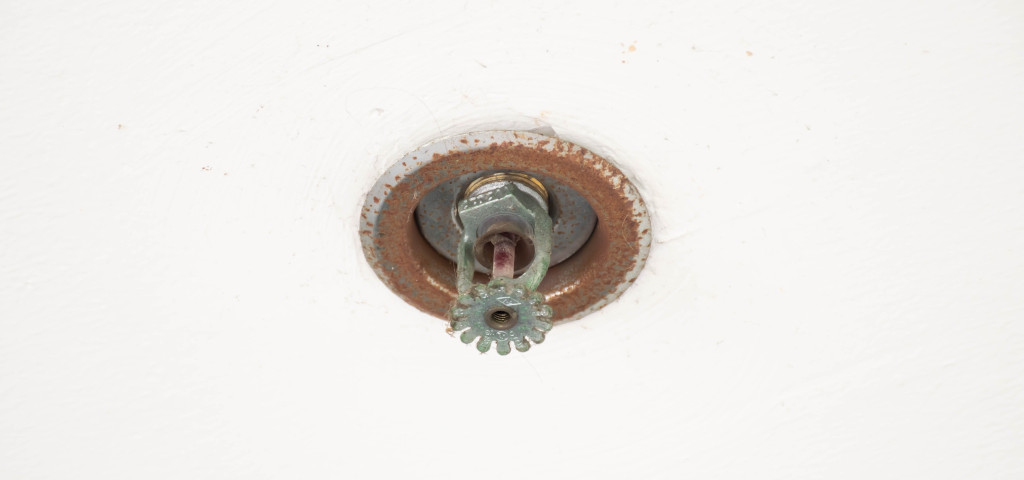
The problem
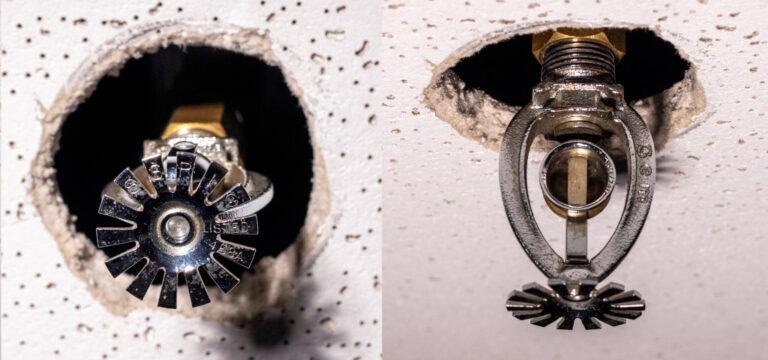
Fire sprinklers and escutcheons can last for decades, but specific models and even some brands come and go. When an escutcheon becomes damaged, corroded, painted, or lost and needs replacing, the original part may no longer be available.
That leaves you searching for a part that fits the installation, looks right, and, in some cases, must be a listed match to the sprinkler to avoid a deficiency tag after an inspection. So, how do you find a replacement escutcheon when the old one is no longer made?
Why this matters
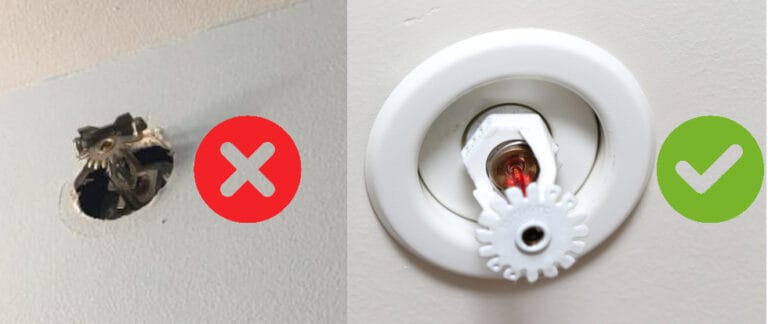
In some cases, a missing or damaged escutcheon is an NFPA 25 deficiency that will get flagged during an annual inspection. In other cases, a missing, corroded, painted, or damaged escutcheon just leaves an unsightly part or a gap around a sprinkler installed in a ceiling or wall.
NFPA 25 only requires replacing two types of damaged or missing escutcheons that are part of a listed sprinkler assembly:
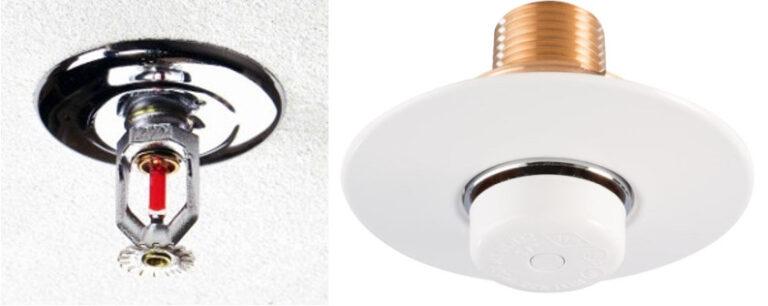
- Recessed escutcheons that are used when sprinklers are installed recessed into a wall or ceiling.
- Flush escutcheons that cover specialized “flush-style” sprinklers, which have most of their parts hidden.
Here is how to tell what type must be listed:
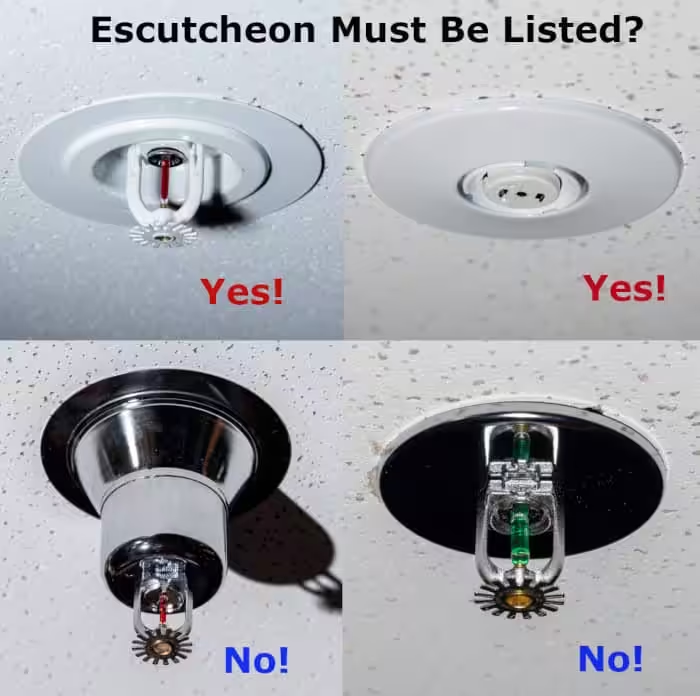
NFPA 25 (2026 edition: 5.2.1.1.5-5.2.1.1.5.1) requires replacing any listed escutcheon if it is:
- Missing
- Damaged
- Has “corrosion detrimental to sprinkler performance”
- Has “loading [heavy dust, grime, etc.] detrimental to sprinkler performance”
- Has non-manufacturer paint on it that’s “detrimental to sprinkler performance”
- “Adhered or attached to the ceiling or wall”
In contrast, a non-listed escutcheon that is missing or has those issues is not an NFPA 25 deficiency. However, it sure won’t look good.
The fix
Here are the steps to replacing an obsolete escutcheon:
1. Determine the sprinkler type and how it is installed
- If a pendent or sidewall sprinkler is recessed into a wall or ceiling, you need a listed recessed escutcheon compatible with that specific sprinkler. A flush-style sprinkler also requires a compatible listed flush type.
- But if a pendent or sidewall sprinkler’s frame projects entirely beyond a finished wall or ceiling, you have more replacement options.
2. When replacing a listed escutcheon for an obsolete recessed or flush-style sprinkler:
- Research the obsolete sprinkler’s manufacturer data sheet to identify its compatible escutcheons. In some cases, the original part might still be available, or the original manufacturer—or the company that acquired it—could offer a current compatible listed replacement.
- But in most cases, you’ll need to replace both the fire sprinkler and the listed escutcheon with a new combination with the same performance characteristics. Ask your local fire protection pro, and QRFS can help!
3. When replacing an unlisted adjustable 401, “flat,” or “standard” model:
Choose a replacement according to the sprinkler’s position, the escutcheon’s height, and the amount of adjustment needed.
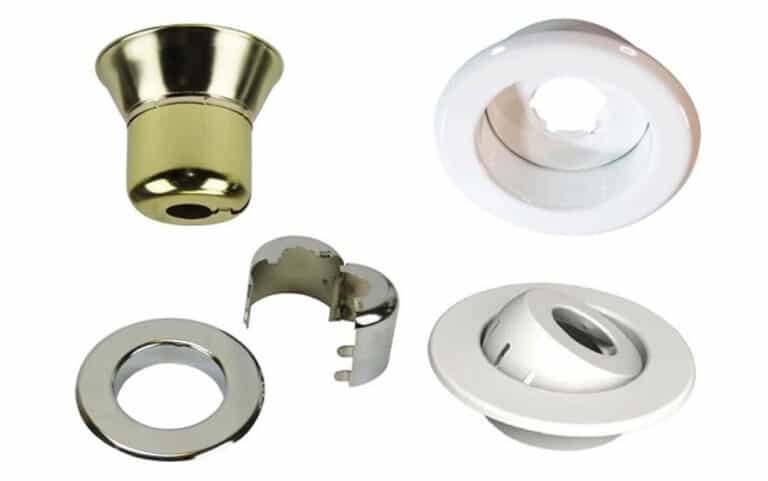
- Choose the right height and adjustment: If the bottom of the sprinkler frame is almost even with the wall or ceiling, a standard flat escutcheon with a height of 0.125 inches or a one-piece escutcheon with a 1/4-inch height may fit. If the sprinkler (and drop or arm-over) projects farther from the surface, choose a 401 adjustable, aka “skirt-and-cup” type. Various 401 adjustable models provide between 1 1/4 inches and 3 1/2 inches of adjustment to cover different distances between the sprinkler and the wall or ceiling.
- Also match the escutcheon to the sprinkler’s connection size. Many are designed specifically for either 1/2-inch or 3/4-inch NPT sprinklers.
- Finally, consider a retrofit escutcheon. Its ring or cup splits for easy removal and attachment around the base of the sprinkler, avoiding the need to remove the sprinkler, drain the system, and the additional time and expense involved.
QRFS carries recessed, institutional flush, flat/standard, 401 adjustable, and retrofit escutcheons. We also carry models from Reliable, Senju, Tyco, Victaulic, and Viking. Need help finding the right replacement? Contact us.
Product recommendations
FAQs
Maybe. A recessed or flush-style sprinkler requires a listed escutcheon specifically compatible with that sprinkler. Check the sprinkler’s data sheet to determine whether the original escutcheon or a newer compatible replacement is available. Unlisted escutcheons don’t need a precisely compatible replacement, but they need to fit the sprinkler and installation distance.
You will need to replace both the obsolete sprinkler and its escutcheon. The new sprinkler should have the same required performance characteristics and a currently available listed escutcheon.
No. Flat, standard, and 401 adjustable (skirt-and-cup) escutcheons do not need to be listed when used with sprinklers whose frames project entirely beyond the wall or ceiling.
A split-ring or split-cup retrofit escutcheon can snap apart and close around the base of an installed sprinkler. This can avoid removing the sprinkler and draining the system, reducing labor, downtime, and replacement costs.