The problem
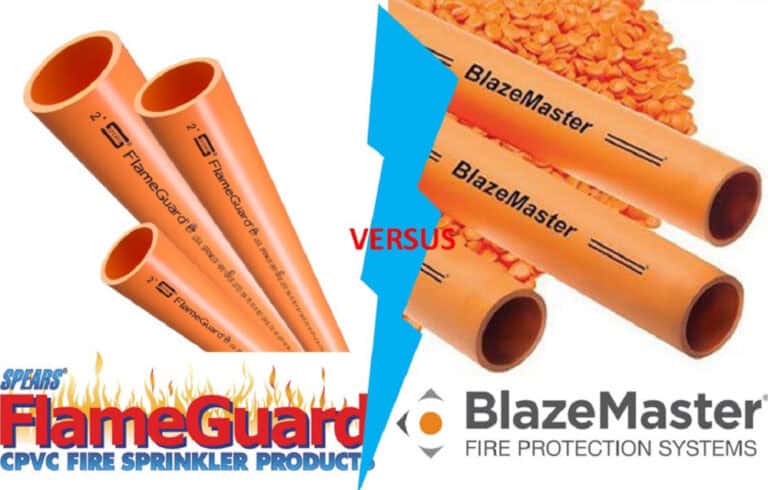
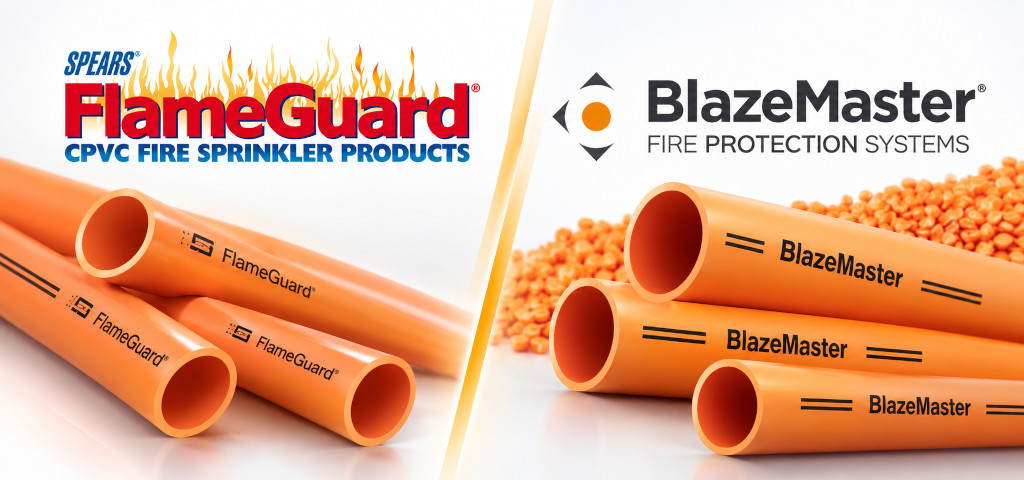
You need to extend or repair a CPVC fire sprinkler system. The existing pipe and fittings might be Viking BlazeMaster®, Spears FlameGuard®, or another listed sprinkler CPVC, and you need new pipe, fittings, and solvent cement. Can you simply buy any fire sprinkler CPVC pipe or fitting that fits?
Often, yes—but not always, and not simply because it fits. Many CPVC sprinkler products from different manufacturers are UL Listed for use together, but not in every application. Whether they can be mixed depends on the specific products and how the sprinkler piping is installed.
Why this matters
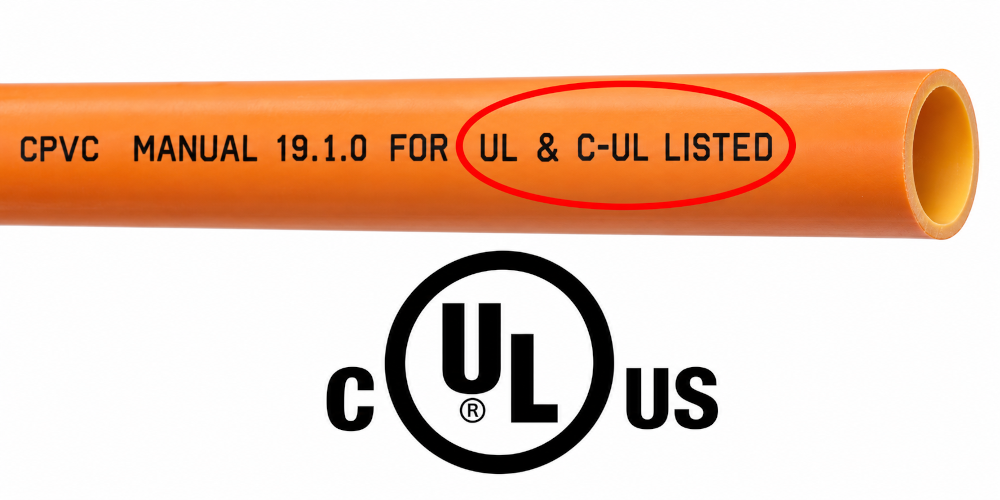
First, fire sprinkler CPVC pipe, which is typically orange, is not interchangeable with ordinary plumbing CPVC, which is usually tan or beige. Nonmetallic sprinkler pipe must be listed for fire protection service, and UL evaluates thermoplastic sprinkler pipe and fittings under UL 1821. A CPVC brand’s specific product listings can also impose installation limitations, particularly when CPVC is exposed instead of protected by ceilings or walls.
There is also an important distinction between two common names. FlameGuard is Spears Manufacturing’s sprinkler CPVC product line. BlazeMaster is a slightly different CPVC compound and fire sprinkler system brand from Lubrizol that is made into pipe and fittings by partner manufacturers, including Viking.
Different brands can have slightly different listings, even when their basic dimensions allow them to connect. They might also have different chemical-compatibility requirements for substances the piping may contact. Thus, the question is not simply whether two pieces of CPVC fit together—it is whether that combination is listed and allowed for a specific application.
The fix
Start by identifying the existing CPVC from the markings printed on the pipe and fittings. Then check the current installation instructions for both the existing products and anything you plan to add.
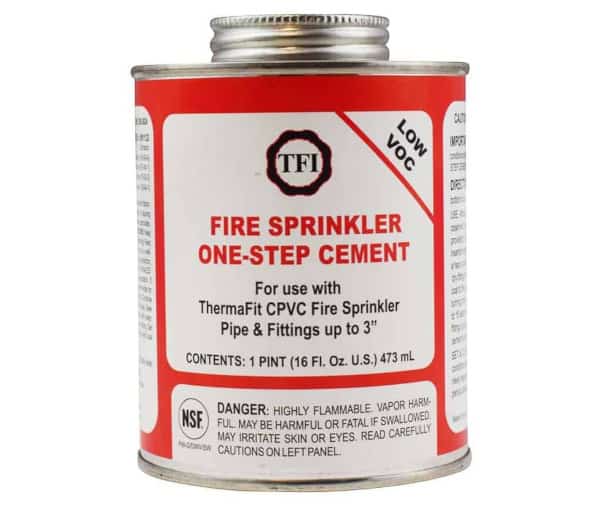
1. For many ordinary installations, FlameGuard, BlazeMaster, and other branded products can be mixed. For example, Spears’ installation instructions state that FlameGuard products are UL Listed for use with UL Listed IPEX pipe and fittings, Tyco Fire Products pipe and fittings, Viking pipe, GF Harvel pipe, and NIBCO fittings. And while Spears’ instructions recommend its FS-5 FlameGuard® One-Step CPVC Cement, they also permit IPEX BM-5, NIBCO FP-1000, and Tyco TFP-500 sprinkler solvent cements. Viking provides similar guidance for BlazeMaster in its product specifications, which list Spears pipe and fittings among the UL/ULC-listed CPVC products compatible with Viking BlazeMaster, along with Tyco and IPEX products. Viking’s current BlazeMaster manual identifies TFP-500, BM-5, FP-1000, and TFP-600 as permitted one-step solvent cements in several listed applications, while its general instructions specify Viking-approved CPVC one-step cement.
2. But being listed for fire sprinkler service does not mean a product is approved for every installation. Spears specifically warns that application approvals can differ among manufacturers, and Viking gives essentially the same instruction: installers must verify that products used together are suitable under each manufacturer’s installation instructions. That’s relevant because …
3. Some listings for specific applications prohibit mixing brands. For example, Lubrizol states that BlazeMaster is the only CPVC pipe fire sprinkler system UL Listed for embedding in cast-in-place concrete, so competing CPVC products cannot be substituted in the embedded portion of the system. In addition, BlazeMaster has a UL listing for certain exposed NFPA 13D residential installations in unfinished basements with open-web joists (see the “Installation rules” section here). These listed applications do not permit mixing different brands; BlazeMaster pipe and fittings must be used.
4. Check brand-specific chemical compatibility. Some thread sealants, firestopping materials, lubricants, paints, oils, and other incompatible substances that contact CPVC can chemically attack the material, causing softening, stress cracking, loss of strength, or premature pipe and fitting failure. For substances the piping may contact, check each brand’s compatibility guidance (e.g., FlameGuard and BlazeMaster)for materials that are acceptable—or specifically identified as incompatible—with each CPVC system.
So, using the same CPVC brand throughout is often the easiest way to avoid compatibility questions, but it is not a universal requirement.
FlameGuard, BlazeMaster, and other brands’ CPVC pipe and fittings can often be mixed, and fire protection pros do this. But before adding to an existing system, identify the products, determine whether any special application listing applies, and follow the installation instructions for every manufacturer involved.
When you need CPVC, QRFS carries both Viking BlazeMaster and Spears FlameGuard CPVC pipe, fittings, and compatible cements . Shop by brand or view our complete CPVC inventory. If you have any questions, contact us!
Product recommendations
FAQs
Often, yes. For example, both Spears FlameGuard and Viking BlazeMaster permit use with certain other listed fire-sprinkler CPVC products. However, some specific applications—such as embedding piping in concrete or certain exposed NFPA 13D installations in unfinished basements with open-web joists—have additional listing restrictions that can limit or prohibit mixing brands.
Not exactly. Fire sprinkler CPVC is specially listed for fire protection service and must meet applicable performance requirements. However, BlazeMaster and Spears FlameGuard use different CPVC formulations, and they differ in certain properties and application-specific listings.
Chemical compatibility means whether substances that contact CPVC—such as sealants, lubricants, paints, oils, or firestopping materials—can do so without damaging it. Incompatible substances can cause softening, stress cracking, weakening, leaks, or premature failure. Check each CPVC manufacturer’s chemical-compatibility guidance, because a material acceptable for one system might not be acceptable for another.
Manufacturers approve certain other brands’ sprinkler CPVC solvent cements for use with their products. Check the current installation instructions for the specific pipe and fittings to confirm which cements are permitted and what assembly and curing procedures apply.