


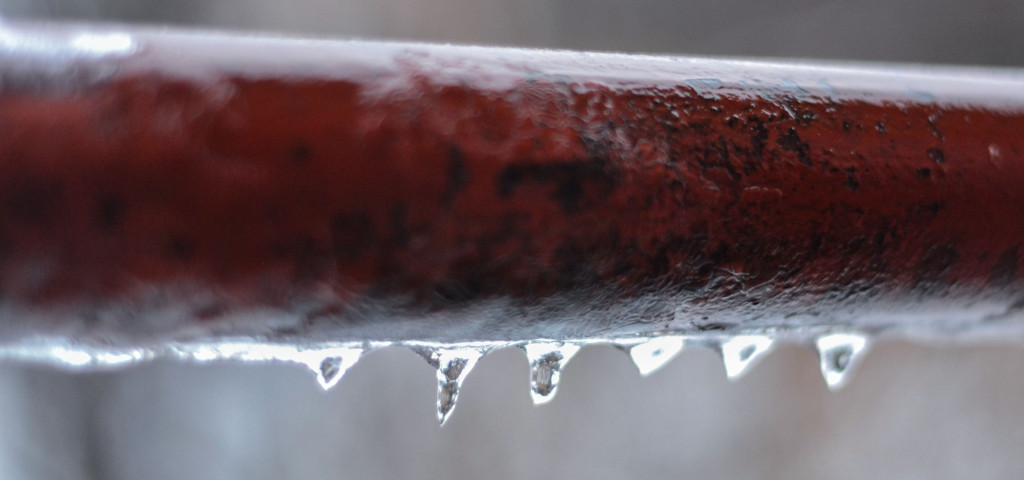
The importance of sealing around dry sprinkler barrels
Dry sprinklers can extend fire protection from warm to cold spaces. The long barrel of the sprinkler protrudes from the water supply connection through an insulated wall or ceiling into a freezing space, preventing the pipes from freezing and providing sprinkler coverage. But the hole cut to accommodate a dry sprinkler barrel can create a new temperature problem. Without sufficient air sealing around the barrel, warm, moist air can infiltrate through the penetration and freeze on the sprinkler. Spray foam is the standard answer to this problem, but it can crack. A piece of hardware called a dry sprinkler boot solves this problem.
Read more to learn:
- Why dry sprinkler boots are needed
- How sprinkler boots work
- Basic considerations for choosing a sprinkler boot
QRFS stocks sprinkler boots from Tyco and Viking to ensure perfect air sealing around dry sprinkler penetrations. Check them out today, or contact our customer service team to request a part you don’t see on our site.
Why are dry sprinkler boots needed?
As mentioned, a key purpose of a dry barrel sprinkler is to extend sprinkler protection into a freezing or possibly freezing area (such as a cold-storage area or loading dock) from a climate-controlled space. These penetrations should be sealed, as NFPA 13: Standard for the Installation of Sprinklers says (15.3.3): “Where dry sprinklers are connected to wet pipe sprinkler systems protecting insulated freezer structures, the clearance space around the sprinkler barrel shall be sealed.” Bad air sealing around these penetrations can lead to moisture condensation on the cold side; water builds up and freezes on the dry sprinkler head, damaging the sprinkler or possibly preventing it from operating.
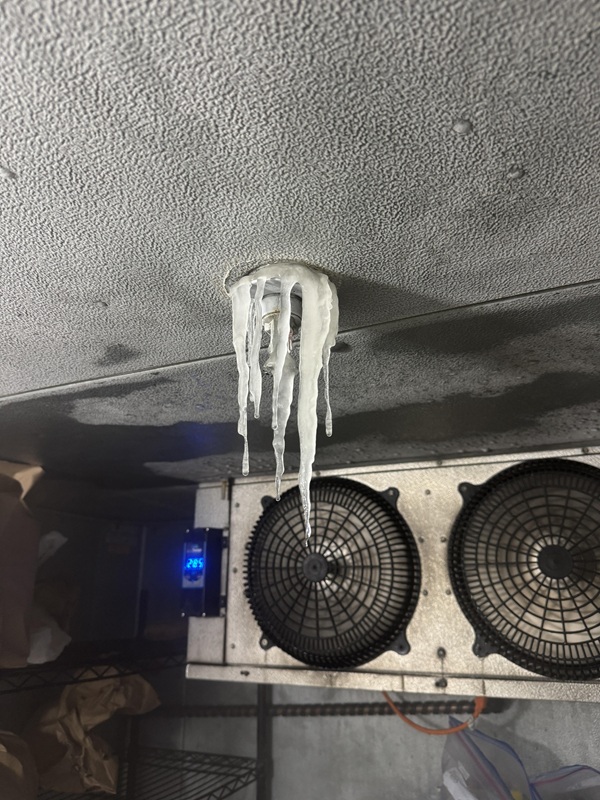
Spray foam is an obvious choice for air sealing. However, the NFPA 13 annex notes that the seal can break if the ceiling flexes. As Meyer Fire explains, differential movement between a freezer space and the heated area is common, which makes cracked foam also a recurring concern.
The solution to this is a sprinkler boot, a kind of elastic flashing that fits around the barrel of a dry sprinkler to create a seal. NFPA 13 does not specifically require sprinkler boots, but this hardware effectively solves the issue caused by leaky foam air-sealing.
How they work
Sprinkler boots work like airtight escutcheons. They generally install around the dry sprinkler barrel on the warm side of the penetration, and they seal to the sprinkler barrel and ceiling surface. Different sprinkler manufacturers use different styles, but all models feature an elastic ring for flexible, airtight sealing. Check out the different configurations used by Viking, Tyco, and Reliable below.
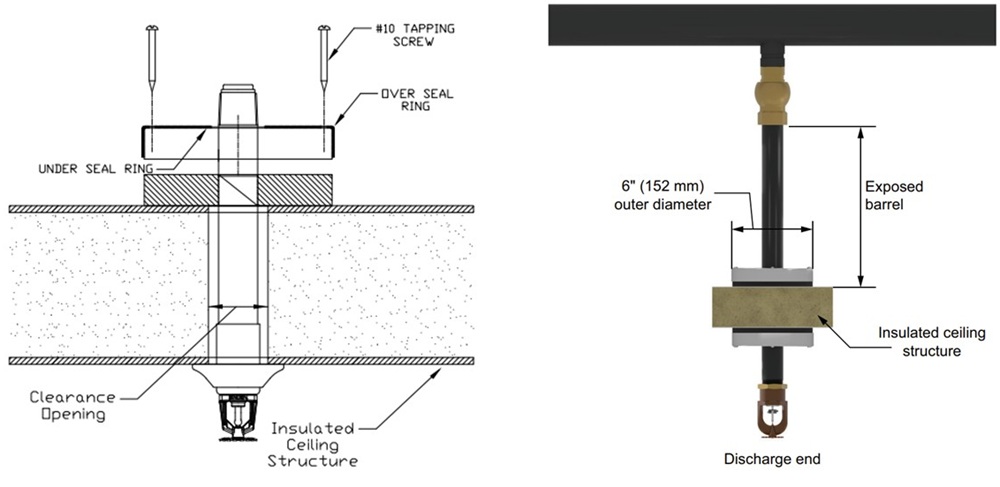
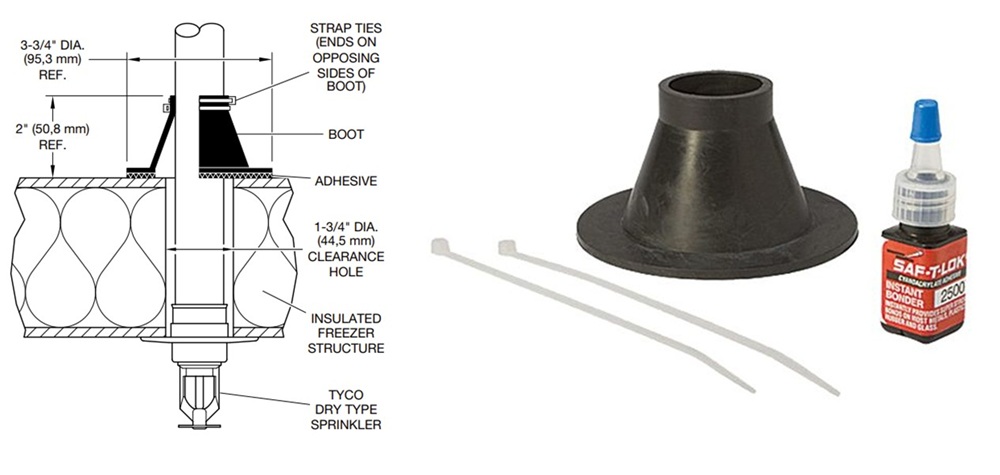
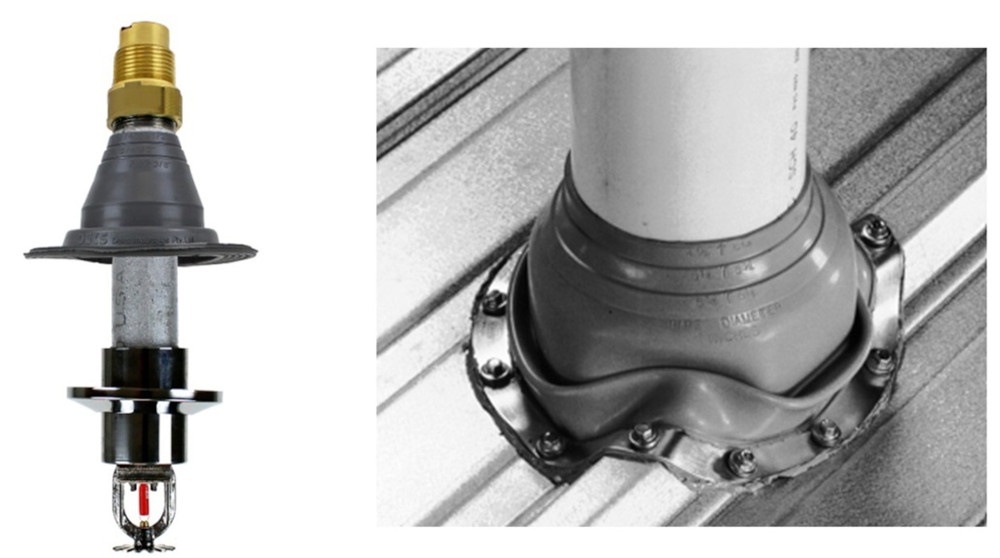
Sprinkler boots are installed around the sprinkler barrel on the warm side of the penetration. However, note that in double-boot arrangements, a second boot is also installed on the cold side.
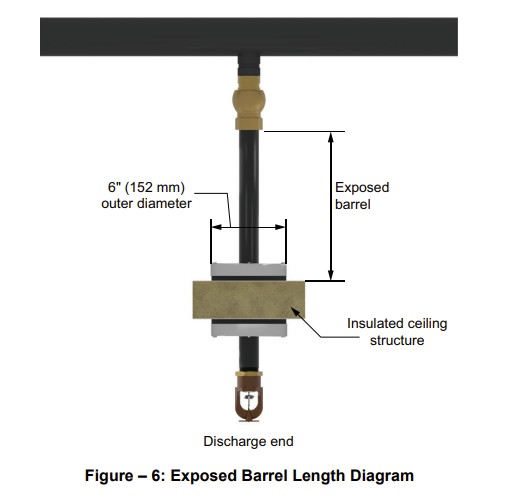
Importantly, the length of exposed dry barrel on the warm side matters for protecting the water supply from freezing. Depending on the temperature difference between the hot and cold sides, the sprinkler barrel on the warm side needs to be longer to ensure the water-filled pipe does not freeze by losing heat through the sprinkler itself. You can read more about that concept here on our blog.
When measuring the length of exposed sprinkler barrel, the part of the barrel covered by the sprinkler boot is still “exposed.” This diagram from Viking demonstrates the concept:
Choosing a dry sprinkler boot
Unlike other fire sprinkler hardware, such as escutcheons or cover plates, buying a sprinkler boot is pretty simple because these parts are generally one-size-fits-most:
- Viking’s 19398M/W fits all Viking dry sprinklers except ESFR and concealed varieties
- Viking’s 22087M/W fits all Viking dry sprinklers except concealed varieties
- Viking’s 22089M/W and 28648M/W fit certain ESFR and ELO dry sprinklers
- Tyco’s Model DSB-2 fits most, if not all, Tyco dry sprinklers
The key is to ensure that the diameter of the sprinkler barrel matches the size of the boot, and you can confirm that very easily by checking the data sheets for each.
However, you don’t necessarily need to use the manufacturer’s specified boot for a sprinkler. NFPA 13 does not specifically require the use of a dry sprinkler boot—it requires sealing the clearance around dry sprinkler barrels in certain installations and notes that foam seals can fail when ceilings flex. So, spray foam remains an option, but other sealing methods may also be suitable. For example, Reliable offers a sprinkler boot made from Dektite pipe flashing. Installers may be able to use other commercially available flashing products, provided they create an effective airtight seal, are appropriate for the application, and do not conflict with the sprinkler manufacturer’s installation requirements.
The data sheets for Viking and Tyco sprinkler boots clearly indicate that, while they are made specifically for their sprinklers, their boots are not laboratory-tested or listed. Because sprinkler boots are not part of listed assemblies, generic hardware could work. Check out our blog for more information about:
Equipment to prevent icing on fire sprinklers
Good air sealing around dry sprinkler penetrations is essential. Otherwise, moist air can infiltrate from the warm side of the partition to the cold side and freeze on the fire sprinkler head. Spray foam is an acceptable solution, but foam can crack over time as the building shifts. So, some sprinkler manufacturers offer a handy, compliant, and effective solution: sprinkler boots that form a quality seal around the dry sprinkler barrel.
QRFS has sprinkler boots from Tyco and Viking in stock, ready to provide perfect air sealing around dry sprinkler penetrations. If you don’t see the part that you need, contact our customer service team!
This blog was originally posted at blog.qrfs.com.
