


Don’t wait for the annual fire sprinkler service call: overlooked inspections and maintenance for building owners and managers
Wet pipe fire sprinkler systems, like any building system, need upkeep. Many building owners and managers satisfy this requirement by scheduling annual service by a fire protection pro to conduct the necessary inspection, testing, and maintenance (ITM) tasks required by codes and standards.
But not everything falls neatly into a yearly schedule—some tasks could be mandated weekly, monthly, quarterly, or as-needed by NFPA 25: Standard for the Inspection, Testing, and Maintenance of Water-Based Fire Protection Systems. Unfortunately, while system owners or their designated representatives are responsible for completing these items, many simply don’t know about them—and they don’t happen.
The most common commercial systems are wet systems, many of which don’t have added fire pumps and instead rely on the pressurized municipal water supply. These systems also make up the majority of smaller setups in occupancies where an owner or manager may only rely on an annual service call. Fortunately, this is also the simplest type of fire sprinkler system with the fewest requirements—including any ITM at shorter intervals.
Tasks that aren’t completed pose a life safety risk in the event of a fire, as well as potential liability and enforcement actions by the authority having jurisdiction (AHJ). So, we’ve compiled a list of some overlooked items that owners and managers should stay on top of. Read on to learn about:
- Who is qualified to do what?
- Checking the status of control valves
- Inspecting and maintaining fire department connections
- Ongoing system maintenance items
If you need parts for your wet sprinkler system or FDC, including sprinklers, wrenches, covers, escutcheons, signs, caps and plugs, and more, check out QRFS’s online selection.
Who is qualified to do what on a wet pipe sprinkler system?
NFPA 25 requires individuals to be “qualified” to perform ITM work on any system, with the latest 2026 edition specifying that qualification is “for the specific tasks performed” (4.1.1.3). Fortunately, subject to AHJ approval, the less-than-yearly items are mostly fairly simple visual inspections that on-site staff can easily learn and become qualified to do.
Checking the status of control valves
Control valves, which turn the water on and off to the system or a section of it, allow sprinkler professionals to shut off and drain a system for maintenance and repairs. But closing the valve also renders sprinklers inoperable, and closed control valves are the most common reason when fire sprinklers fail to work in an emergency. For this reason, ensuring they remain open is likely the single most crucial component of sprinkler system inspection, testing, and maintenance.
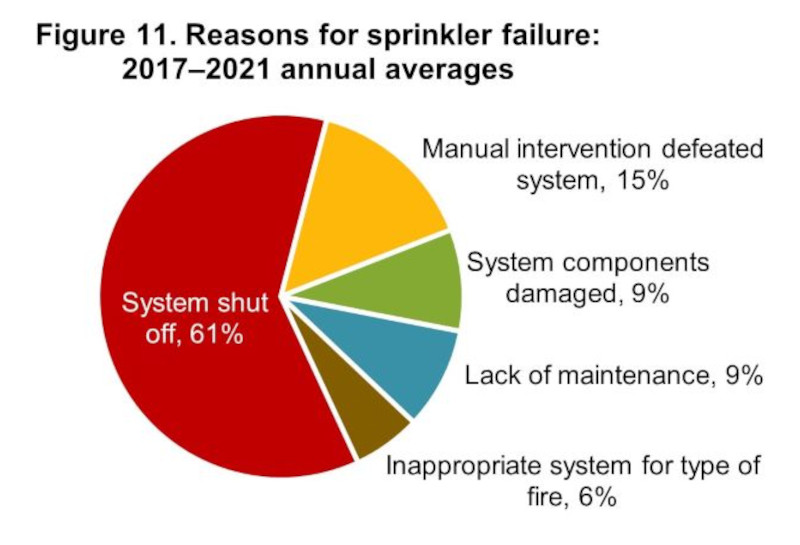
NFPA 25 has variable rules for inspecting control valves, depending on if they are monitored and/or secured:
- Control valves that are not locked or supervised to ensure they stay in the open position must be inspected weekly (2026 edition: 13.3.2.1)
- Control valves that are locked must be inspected monthly (13.3.2.1.1)
- Control valves that are electrically supervised must be inspected quarterly (13.3.2.1.2), along with looking for any damage to the control valve supervisory alarm devices (13.3.2.1.3)
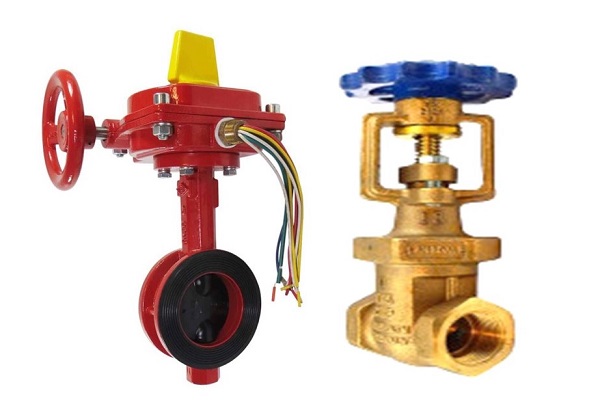
Fortunately, this inspection is easy. All control valves must be “indicating valves,” meaning they visually show whether they are open or closed. Thus, OS&Y gate or butterfly valves are typically used because they have this feature. An OS&Y valve indicates its open position by the stem being raised above the handwheel, while a butterfly valve indicates this status by the indicator being parallel to the pipe.
Inspecting and maintaining FDCs
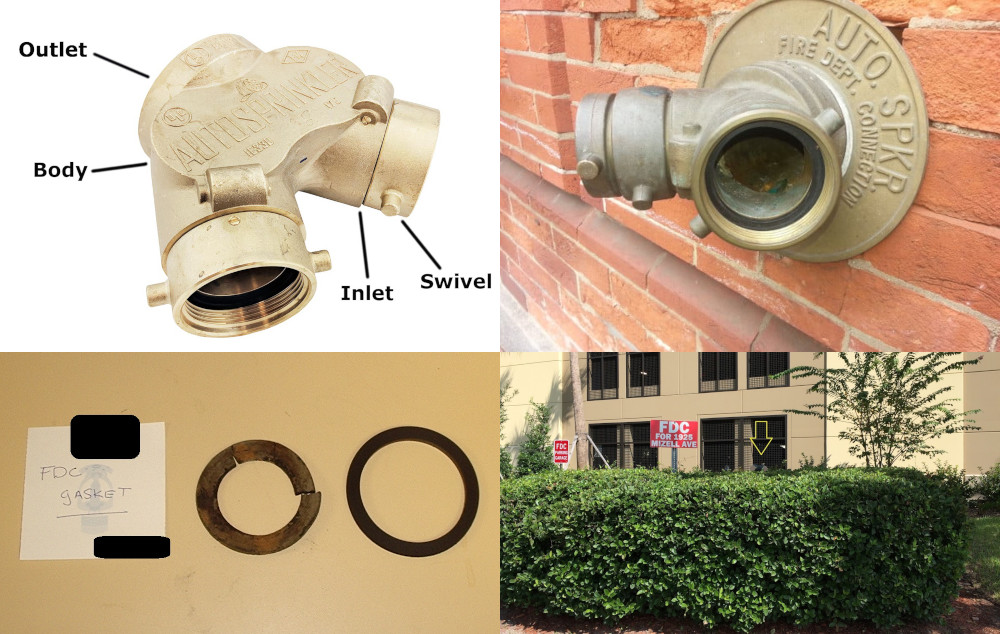
The vast majority of fire sprinkler systems also have fire department connections (FDCs), which allow firefighters to pump water into the building to supply or supplement sprinkler systems and accompanying standpipe systems. Located on the outside of a building, either on a wall or freestanding from the structure, this equipment is vital for emergency response—and it has parts that can get damaged, leak, be blocked, or go missing.
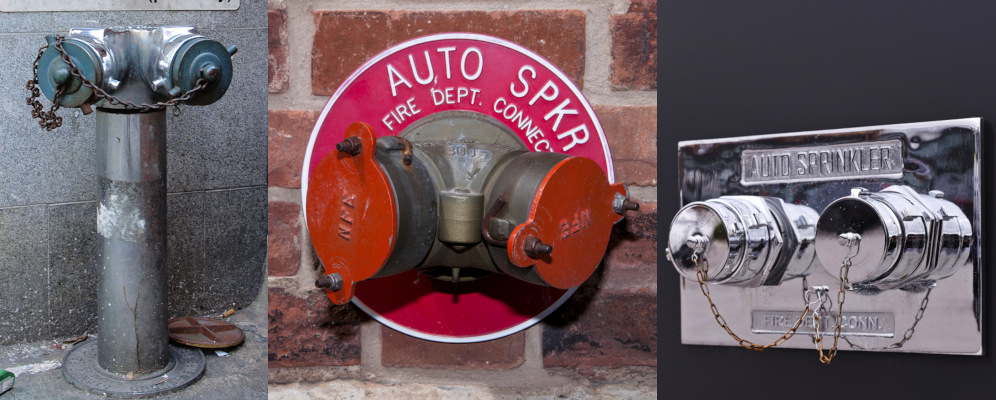
NFPA 25 mandates basic quarterly inspections of FDCs:
13.8.1 Fire department connections shall be inspected quarterly to verify the following:
(1) Fire department connections are visible and accessible.
(2) Couplings or swivels are not damaged and rotate smoothly.
(3) Plugs or caps are in place and undamaged.
(4) Gaskets are in place.
(5) Identification signs are in place.
(6) Check valve is not leaking.
(7) Automatic drain valve is in place and operating properly.
(8) Fire department connection clapper(s) is in place and operating properly.
(9)* Interior of the connection is inspected for obstructions.
(10) Visible piping supplying the fire department connection is undamaged.
Unfortunately, some of these items require a little know-how, such as locating the automatic drain valve and understanding what it does. (This valve, which allows trapped water to escape, sits between the low point in the pipe that runs between the exterior FDC and the FDC check valve leading to the rest of the system.) However, most of the items above involve simply looking at these parts and scanning for damage and missing items.
The simplest items are to make sure required signs are in place, ensure clear access to the FDC (no blocking snow or bushes), spot any visible damage, and inspect the FDC for missing caps and plugs. That last item is a common issue, as caps and plugs can get stolen. This is an issue because an open FDC allows debris to enter the pipe system and potentially block water when it’s needed most.
To learn many more details about FDC ITM and how to identify and buy replacement parts, check out these QRFS resources:
- Fire Department Connections: A Guide to FDC Maintenance
- You (Probably) Don’t Have a 3” FDC: Sizing FDC Fire Equipment, Caps, & Plugs
- Replacing a Fire Department Connection Swivel
Ongoing wet pipe sprinkler system inspection and maintenance items
In addition to ITM tasks set at specific intervals, there are a few ongoing things that building owners and managers should stay on top of. These include:
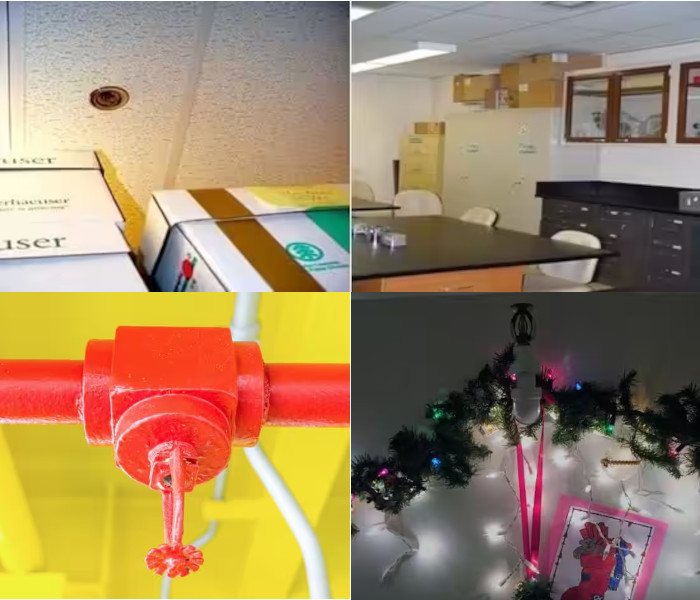
- Sprinklers must never be painted or otherwise altered, ornamented, or coated (5.4.1.7)
- Nothing that isn’t part of the system—not even light wires or objects—should hang on or touch the pipes (5.2.2.2)
- A sufficient stock of spare sprinklers and compatible wrenches must be maintained in an onsite cabinet (5.4.1.6–5.4.1.6.5)
- (With few exceptions) Keep all storage and other objects at least 18 inches away from sprinklers’ deflectors to prevent the spray patterns from being blocked (5.2.1.2–5.2.1.3).
Know the wet pipe sprinkler system basics and stay compliant
The inspection and maintenance items above don’t include everything that must happen at intervals shorter than a year in every system, but they cover common and important things that are often overlooked. These items apply to various system types, but the complexity and list of responsibilities increase as systems become more complex.
For example, the presence of a fire pump, the use of a water supply tank, and a dry pipe system all require additional sub-annual inspections, testing, and maintenance. We’ll cover some of those responsibilities in future blogs.
Regardless, if you are responsible for a wet system, ensuring that on-site staff is qualified to perform simple inspections and stay on top of basic maintenance items—while documenting these activities—is important. It will help ensure that systems work when they are needed while possibly avoiding legal liability and inspection violations down the road.
If you need parts for your wet sprinkler system or FDC, including sprinklers, wrenches, covers, escutcheons, signs, caps and plugs, and more, check out QRFS’s online selection. Have a question or need help finding equipment? Contact us!
This blog was originally posted at blog.qrfs.com.
