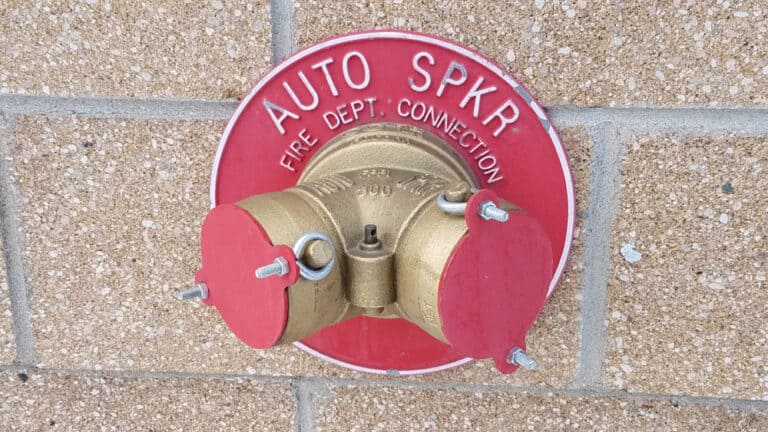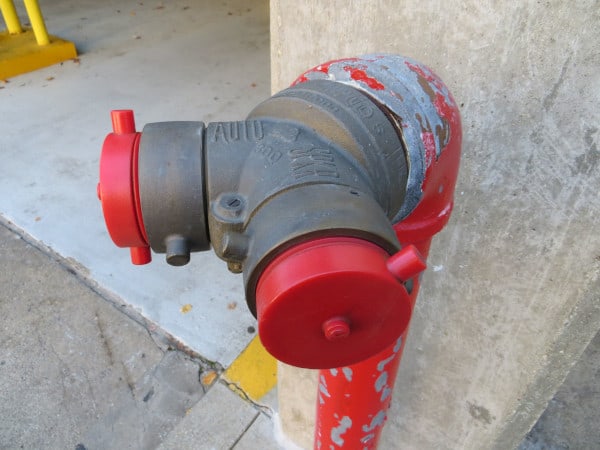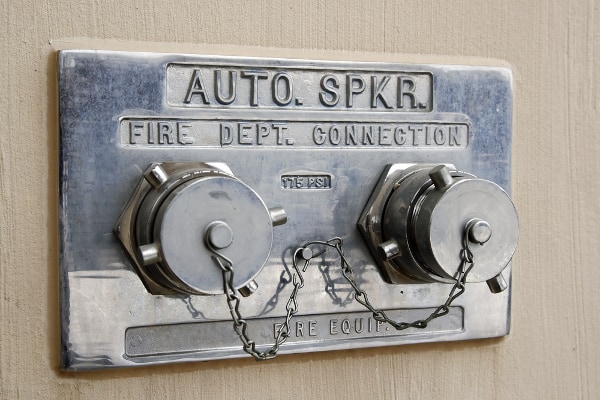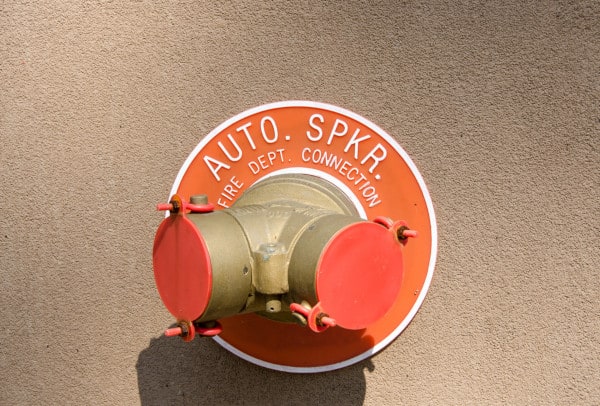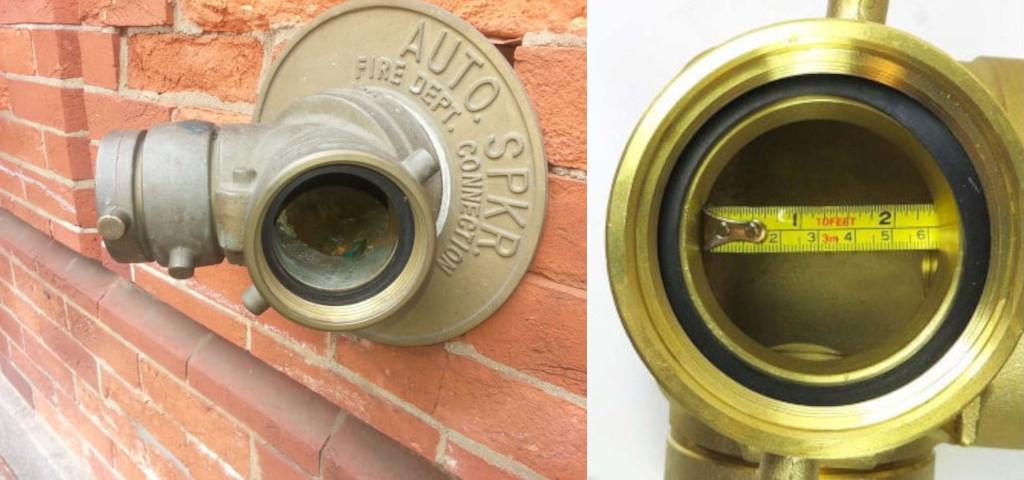
Problem: Missing caps or plugs on FDCs
If your FDC is missing a cap or plug, you’re risking more than just a code violation. Open inlets on a fire department connection become a welcome mat for debris, trash, and even small animals. These blockages can severely restrict or completely cut off the water supply that firefighters rely on to protect your building. In worst-case scenarios, debris gets sucked into the piping system, leading to major clogs and expensive repairs.
During an emergency, a compromised FDC could mean insufficient or no water flow, putting lives and your property at risk. It’s a simple part—but without it, your fire protection system can fail when it’s needed most.
Why this matters: Missing plugs or caps fail fire inspections & block systems
NFPA standards don’t make plugs and caps optional—they’re mandatory, and for good reason. The rules ensure your FDC is always ready for immediate use in a fire emergency:
NFPA 13 /14 (2025/2024), 16.12.3.2/7.9.5: Fire department connections shall be equipped with approved plugs or caps, properly secured and arranged for easy removal by fire departments.
NFPA 25 (2023), 13.8.1: Fire department connections shall be inspected quarterly to verify the following: (3) Plugs or caps are in place and undamaged.
Failing to comply will result in inspection deficiencies, fines, or worse—a non-functional FDC when firefighters need one. This isn’t just about staying legal—it’s about being ready.
The fix: Size, choose, and buy replacement FDC caps or plugs
Replacing a missing FDC cap or plug is pretty straightforward but critical. First, measure the inside diameter of the FDC opening (not the outside) to determine the correct size—many commercial FDCs use 2-1/2″, but some cities like NYC or San Francisco may require 3″ or other sizes. Smaller residential systems may use 1-1/2″.
Next, decide between a plug or a cap:
- Plugs twist into the FDC threads and are typically made of brass, cast iron, aluminum, or plastic. They often include a chain.
- Caps are aluminum or plastic discs secured over the FDC opening with an eyebolt. They’re easier to replace and may be less prone to theft.
If choosing plugs, verify the thread type—usually National Standard Thread (NST), but some cities use custom thread types. Check with your local fire department or fire protection contractor to ensure compatibility.
Buyer’s guide
Choose based on your needs:
- For quick installation and less theft risk, consider breakable caps.
- If you prefer threaded security and don’t mind extra thread-identification steps, plugs with chains are durable and secure.
- Not sure? Browse all FDC cap and plug options to find the right fit for your size and jurisdiction.
Product recommendations
Keep those FDC inlets protected
Prevent code violations and stop debris from blocking fire department connections:
Shop our full selection of FDC caps and plugs
FAQs
How do I know what size FDC cap or plug I need?
Measure the inner diameter of the FDC opening or the diameter of threads on an existing plug for sizing. 2-1/2″ is the most common size, but jurisdictions and systems vary.
What’s the difference between a cap and a plug?
Plugs screw into the threads inside the FDC’s open swivel; caps cover the opening and tighten with eyebolts. Caps are less likely to be stolen.
Do I need to worry about thread type for plugs?
Yes. Most use National Standard Thread (NST), but always confirm the thread type with your local fire department or fire protection contractor to ensure compatibility.
Are inspections required for FDC caps/plugs?
Yes. NFPA 25 mandates quarterly inspections to verify caps or plugs are present and undamaged.
What happens if my FDC is inspected and the plug or cap is missing?
You’ll receive a violation (deficiency) notice that requires a correction ASAP, and you’re at risk of a non-functional system in a fire.